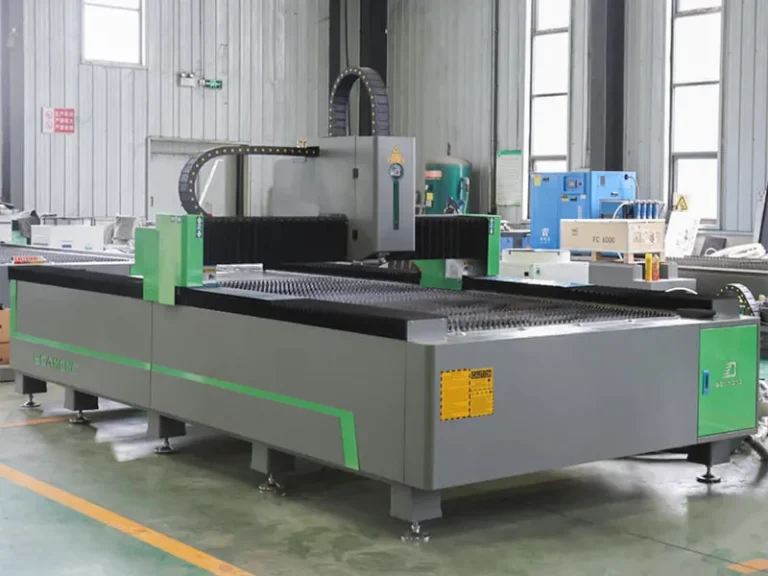

The automotive industry is evolving faster than ever, driven by increasing demands for efficiency, precision, and lightweight design. As manufacturers push for smarter production methods, fiber laser cutting has become one of the most essential technologies on modern factory floors. Its ability to deliver clean, accurate, and repeatable cuts makes it a cornerstone in automotive part fabrication.
Below are the major reasons why fiber laser cutting has become indispensable for automotive manufacturers.
1. High-Speed Cutting for Modern Production Lines
Automotive production runs on strict timelines. Fiber laser cutting systems operate significantly faster than mechanical or thermal cutting methods, allowing manufacturers to process components in a fraction of the time. This speed translates into higher output, smoother workflow, and the capacity to meet demanding production targets without sacrificing quality.
2. Superior Precision and Repeatability
Vehicle parts must meet exact specifications—from exterior panels to intricate engine components. Fiber lasers offer micron-level accuracy and produce consistent results across long production cycles. This ensures perfect fit, clean edges, and uniform quality, supporting both performance requirements and visual appeal in finished vehicles.
3. Multi-Material Flexibility
Automotive design incorporates a growing variety of materials: stainless steel, high-strength alloys, aluminum, copper, coated metals, and more. Fiber laser cutting machines can handle all of these with ease. This versatility allows factories to consolidate processes, reduce machine changeovers, and maintain efficient production lines, even when switching between different materials or part designs.
4. Lower Operational Costs Through Efficiency
Because fiber lasers cut quickly and precisely, they significantly reduce scrap rates and material waste. In an industry where materials represent a major cost, even small reductions in waste can add up to substantial financial savings. Fiber lasers also have lower maintenance requirements compared to traditional cutting equipment, contributing to overall cost efficiency.
5. Reliable and Safe Processing of Structural Components
Mechanical cutting can introduce stress, warping, or micro-cracks in automotive parts—issues that compromise safety and durability. Fiber laser cutting is a non-contact process, meaning the material isn’t physically touched during cutting. This helps maintain structural integrity, especially for components that demand high strength and long-term reliability.
Bring Advanced Fiber Laser Technology Into Your Automotive Production
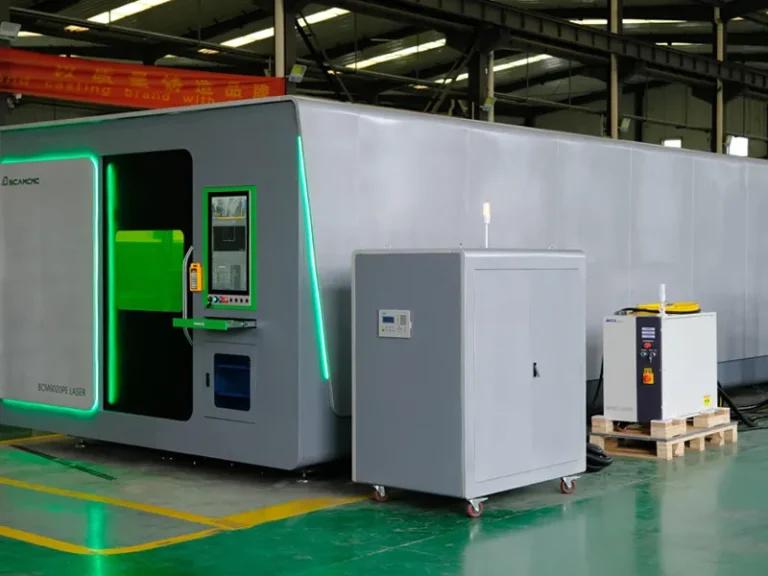
BCAMCNC offers high-performance fiber laser cutting solutions designed specifically for industrial and automotive manufacturing environments. Our systems combine power, precision, automation, and stability—ensuring your production line runs safely, smoothly, and efficiently.