
Cabinet makers need a machine that is fast, stable, and accurate. Many shops today use a CNC router to improve efficiency and keep up with customer demand. But with so many models on the market, it can be hard to choose the right one.
This guide will help you understand which CNC router works best for cabinet work and why.
Why Cabinet Shops Need a CNC Router
Cabinet production includes cutting, drilling, slotting, and shaping. A good CNC router helps you:
- Increase cutting speed
- Get clean edges on MDF, plywood, and particle board
- Keep sizes consistent
- Reduce labor
- Improve production flow
For cabinet manufacturers, the right machine can directly raise output and product quality.
1. ATC CNC Router – Best Choice for Professional Cabinet Shops
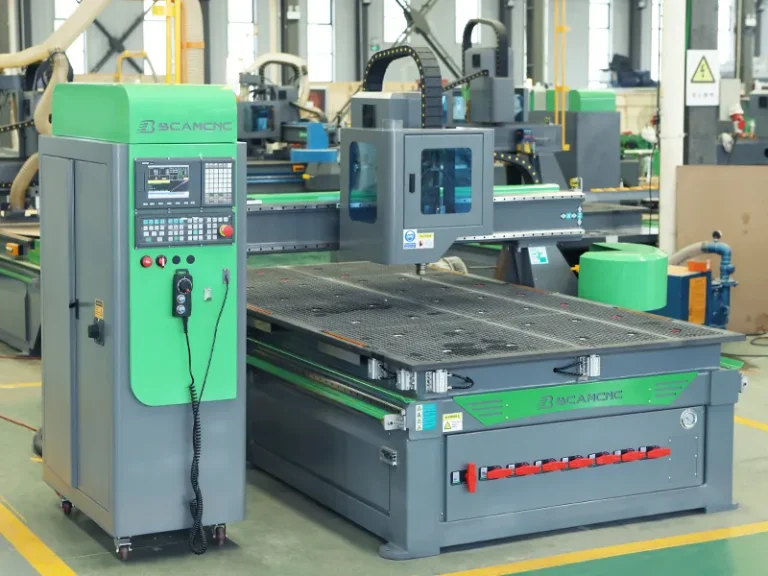
For medium and large workshops, an ATC CNC router is the most efficient option.
Why it fits cabinet production
- Automatic tool change for drilling, grooving, and cutting
- Smooth switching between different tools
- High precision for door panels, carcass panels, and special shapes
- Works well with nesting software
- Suitable for long-time, heavy-duty use
If you want fast production and less manual work, ATC is the best investment.
2. Four-Process CNC Router – Good for Small and Growing Shops
A Four-Process CNC router has four spindles that switch automatically. It is simpler than ATC but still efficient.
Advantages for cabinet making
- No tool change waiting time
- One spindle for cutting, one for slotting, one for drilling, etc.
- Lower cost than ATC
- Easy to operate and maintain
This machine works well for small factories or shops with limited budgets but still need high efficiency.
3. Nesting CNC Router – Most Efficient for Panel Cutting
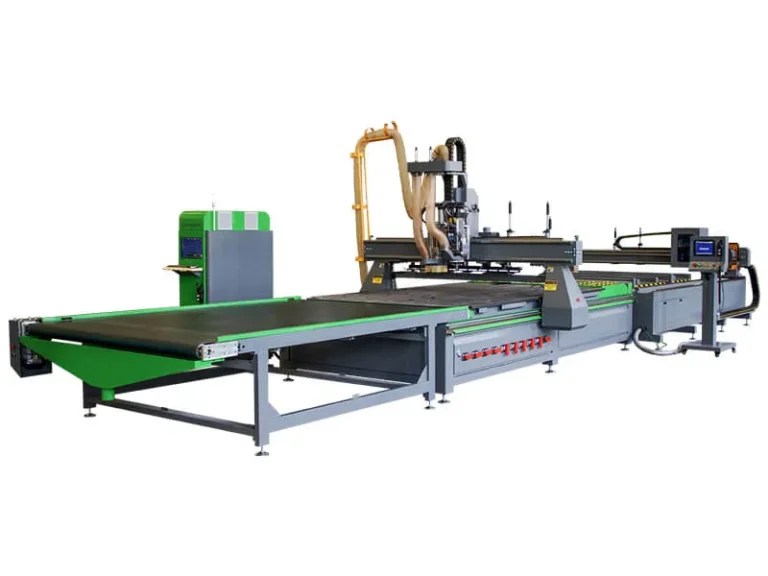
A Nesting CNC router is designed for fast and accurate sheet cutting. It is widely used in modern panel furniture lines.
Why it is ideal
- High-speed cutting
- Smart nesting software for less waste
- Clean edges
- Works perfectly with cabinet design programs
- Can connect with auto loading and unloading systems
If your main work is MDF and plywood cutting, a nesting machine gives the best efficiency.
4. 4-Axis CNC Router – For Special Cabinet Designs
A 4-axis machine is not required for most cabinet parts, but it is useful if you produce:
- Curved doors
- Special solid-wood edges
- Deep milling details
- Custom shapes
It adds more flexibility for premium or custom projects.
How to Choose the Right CNC Router
When selecting a machine, focus on:
✔ Production volume
Large factories → ATC or nesting machine
Small shops → Four-process
✔ Budget
Four-process is cheaper, ATC is more advanced.
✔ Material
If you cut MDF, plywood, particle board → Nesting router
If you also do solid wood → Consider 4-axis options
✔ Automation needs
If you want fast workflow → Choose auto loading and unloading systems.
BCAMCNC Recommendation
BCAMCNC offers full solutions for cabinet production, including:
- ATC CNC Router
- Four-Process CNC Router
- Nesting CNC Router
- 4-Axis CNC Router
- Edge banding machines
- Six-side drilling machines
Every machine comes with CE certification, ISO9001 quality system, 3-year warranty, and reliable after-sales support.
For fast selection, contact:
📧 admin@bcamcnc.com
📱 WhatsApp: +8615154109683