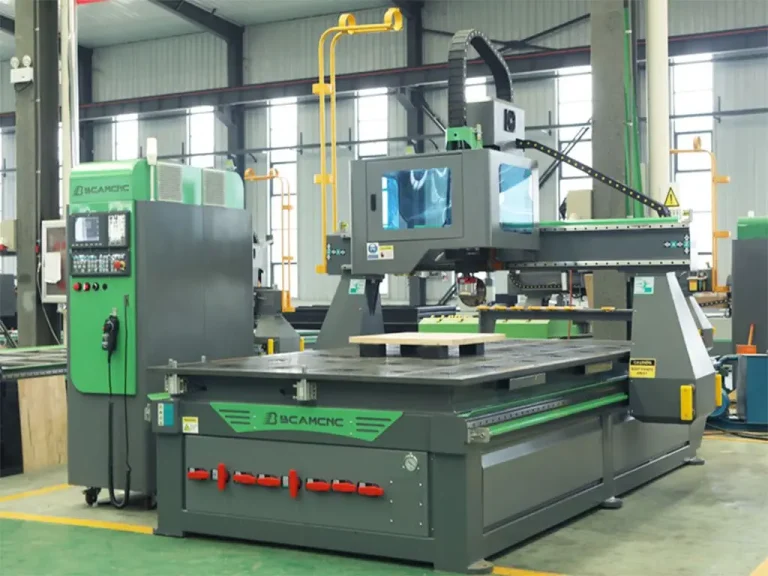

Why Complex Shapes Are Challenging for Fiber Laser Cutting?
Cutting straight lines or simple contours is easy for most fiber laser cutting machines.
However, when it comes to intricate patterns, fine details, tight curves, or sharp corners, many machines struggle.
Common issues include:
Jagged or uneven edges
Loss of detail in small features
Burn marks on tight curves
Slow processing time
Inaccurate corner transitions
Vibration-induced imperfections
These problems occur because complex geometry requires exceptional motion precision, consistent laser output, and stable cutting parameters.
What Makes Complex Cutting Difficult?
1. Limited Axis Resolution
Axis resolution refers to how small and precise the machine’s movement steps are.
Low resolution means:
Rough transitions
Poor curve performance
Inaccurate positioning
This directly reduces the smoothness of intricate patterns.
2. Insufficient Motion Control
Basic machines or low-end controllers often cannot handle:
Fast cornering
High-speed curve following
Sudden directional changes
This leads to “shaking,” distortion, or incomplete details.
3. Inconsistent Laser Energy Output
For complex pieces, the laser must maintain:
Stable power
Accurate focus
Consistent kerf width
If energy fluctuates, fine details are the first to be affected.
4. Low Cutting Speed on Tight Patterns
Some machines slow down too drastically when cutting curves or small radii, causing:
Heat accumulation
Burned edges
Melting around corners
This affects the final appearance and dimensional accuracy.
How to Cut Complex Shapes More Accurately?
1. Use a Machine With High Axis Resolution
Higher-resolution motion systems allow smaller, smoother, and more controlled movements.
Benefits include:
Cleaner curves
Better edge smoothness
Higher detail retention
Accurate micro-features
BCAMCNC machines are equipped with high-precision servo motors and advanced motion modules, ideal for complex work.
2. Upgrade to an Advanced Motion Control System
A strong CNC controller ensures:
Smooth acceleration & deceleration
Accurate path following
Stable corner cutting
Intelligent speed optimization
High-end controllers dramatically enhance performance when processing intricate designs.
3. Optimize Cutting Speed & Power for Fine Details
For small radii and detailed shapes:
Reduce cutting speed moderately
Lower power to prevent burning
Minimize kerf width by adjusting focus
Use nitrogen or high-pressure air for a cleaner edge
Proper parameter tuning prevents melting and maintains detail clarity.
4. Improve Mechanical Stability
Ensure that your machine structure is rigid enough to handle complex patterns without vibration:
A thicker welded frame
Stable gantry design
High-quality rails and bearings
This is one reason why BCAMCNC machines are widely used for artistic metalwork, precision parts, and decorative panels.
5. Use High-Quality Digital Files
Poorly prepared DXF or vector files create:
Broken curves
Excessive nodes
Irregular toolpaths
Always clean up vectors and simplify unnecessary points before cutting.
Applications That Require Complex Cutting Performance
Decorative metal screens
Automotive and aerospace parts
Architectural panels
Kitchenware and appliance components
Precision mechanical parts
Artistic signage and metal crafts
If your workshop produces any of these, high-resolution cutting is essential.
BCAMCNC Solutions for High-Precision Complex Cutting
BCAMCNC fiber laser cutting machines deliver superior results on complex shapes through:
High-resolution servo motors
Advanced motion control systems
Stable cutting power output
Intelligent corner optimization algorithms
Reinforced machine structure for vibration-free cutting
Whether cutting small patterns or large decorative pieces, BCAMCNC ensures accurate, clean, and detailed results.
Conclusion & CTA
Cutting complex shapes requires more than just laser power—it depends on precision motion control, stable energy output, and optimized cutting parameters.
With the right equipment and setup, you can achieve clean edges, perfect curves, and high-detail accuracy even on the most intricate designs.
Explore BCAMCNC fiber laser machines for reliable and high-quality results:
https://www.bcamcnc.com/laser-machine/laser-cutting-machine/