
Why Thermal Damage Happens in Fiber Laser Cutting
One of the most common challenges in fiber laser cutting is thermal damage. You may notice:
Burned or blackened edges
Excessive melting
Warping or distortion of the material
Loss of dimensional accuracy
Thermal damage occurs when the heat generated by the laser exceeds the material’s tolerance, leading to unwanted effects and reducing cut quality.
Understanding the causes of thermal damage is essential for both experienced operators and new users.
Common Causes of Thermal Damage
1. Excessive Laser Power
Using higher-than-needed laser power for the material and thickness can cause the edges to burn or melt.
Overpowered cuts also increase the heat-affected zone, accelerating component wear.
2. Slow Cutting Speed
If the laser moves too slowly, heat accumulates in one area, leading to burning, warping, or edge discoloration.
3. Incorrect Focus Position
When the laser focus is not properly aligned with the material surface, the beam may concentrate too much energy on a small area, increasing the risk of thermal damage.
4. Poor Material Selection
Materials with uneven thickness, coatings, or impurities can absorb heat unevenly, resulting in localized burns or warping.
How to Prevent Thermal Damage
1. Adjust Laser Power to the Minimum Required
The most effective way to prevent thermal damage is to use the lowest laser power needed to achieve a clean cut.
Avoid excessive power that generates unnecessary heat
Test on scrap material to fine-tune the optimal power for each project
Balance power with cutting speed for efficiency
2. Optimize Cutting Speed
Increasing cutting speed reduces the amount of time the laser spends on one spot.
Faster cutting minimizes heat buildup
Paired with proper power adjustment, this prevents warping and burning
Tip: Always test on sample pieces before full production.
3. Calibrate Focus Position
Proper focus ensures the laser beam energy is evenly distributed on the material surface:
Focus too high → incomplete cuts
Focus too low → excessive heat and melting
Regularly check and adjust the focus, especially when changing material types or thicknesses.
4. Use High-Quality Materials
Select materials with:
Consistent thickness
Minimal coatings or impurities
Stable thermal properties
This ensures more predictable cutting results and reduces thermal damage.
5. Employ Proper Gas and Cooling
Using assist gas correctly helps remove molten material and dissipate heat:
Nitrogen or oxygen gas at appropriate pressure
Ensure the gas is clean and dry
Consider air or water cooling for sensitive materials
BCAMCNC machines provide stable gas control modules that support consistent and efficient cutting.
Signs You Need to Adjust Parameters
Watch for:
Blackened or burned edges
Excessive melting along cuts
Material warping
Uneven kerf width
Early detection allows you to fine-tune power, speed, and focus before it affects production quality.
BCAMCNC Solutions for Thermal Damage Control
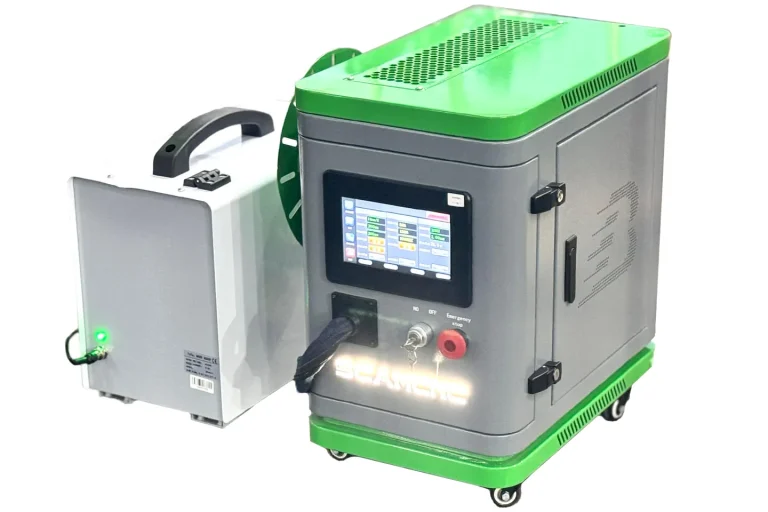
BCAMCNC fiber laser cutting machines help minimize thermal damage with:
Precision laser heads with adjustable focus
Optimized cutting parameters for different materials
Stable assist gas systems
Remote support from BCAMCNC engineers for parameter calibration
Proper setup and maintenance combined with BCAMCNC equipment reduce thermal damage and improve cut quality.
Conclusion & CTA
By controlling laser power, cutting speed, focus, and gas flow, you can prevent burns, warping, and excessive melting. Regular testing and maintenance further protect your materials and enhance productivity.
Explore BCAMCNC fiber laser machines for reliable and high-quality results: https://www.bcamcnc.com/laser-machine/laser-cutting-machine