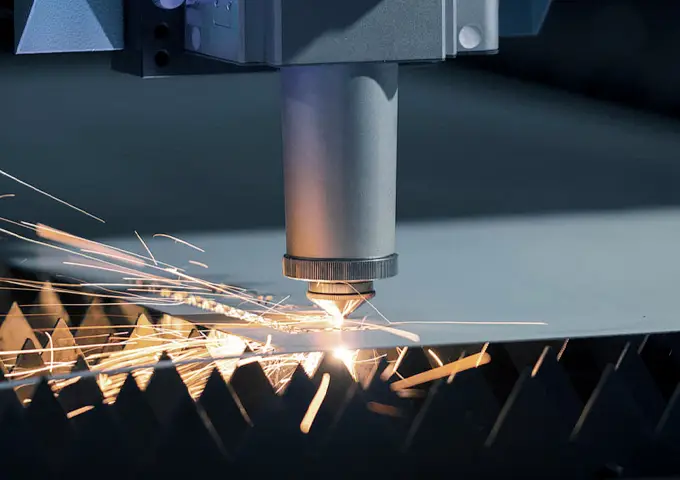

Laser welding has quickly become one of the most effective methods for joining aluminum, offering high-speed productivity, excellent seam quality, and minimal post-processing. However, due to aluminum’s high reflectivity and thermal conductivity, achieving consistently strong welds requires the right preparation, equipment configuration, and parameter control.
Based on BCAMCNC’s experience supporting workshops and manufacturers worldwide, here are the essential best practices to help you get the best results when welding aluminum with a fiber laser system.
1. Prepare the Aluminum Surface for Clean, Stable Welding
Proper preparation is the foundation of a high-quality aluminum weld. Even minor contamination can lead to porosity, weak fusion, or inconsistent penetration.
Remove the Oxide Layer Efficiently
Aluminum forms a tough oxide film that melts at a much higher temperature than the base metal. To ensure smooth melting and stable penetration:
• Use mechanical cleaning (stainless steel wire brushing or abrasive pads)
• Apply solvent cleaning to remove oils or residue
• Consider chemical or plasma treatment for critical applications
Use Suitable Shielding Gas
A protective gas helps control oxidation and stabilize the melt pool during welding.
• Argon provides reliable protection and good arc stability
• Helium improves penetration on thicker or highly reflective aluminum
• Mixed shielding gases can offer both stability and deeper fusion
A clean surface plus proper gas flow significantly reduces weld defects.
2. Choose a Laser Welding System Optimized for Aluminum
Not all laser systems handle aluminum equally well. For stable and repeatable welding, consider the following:
Fiber Lasers for Better Absorption
Aluminum reflects most infrared energy, but fiber lasers at ~1 μm wavelength offer superior absorption and better coupling efficiency compared to many other laser types.
Continuous vs. Pulsed Modes
• Continuous-wave (CW) welding is excellent for thick aluminum plates requiring deep penetration.
• Pulsed welding helps control heat input for thin sheets, preventing burn-through or excessive distortion.
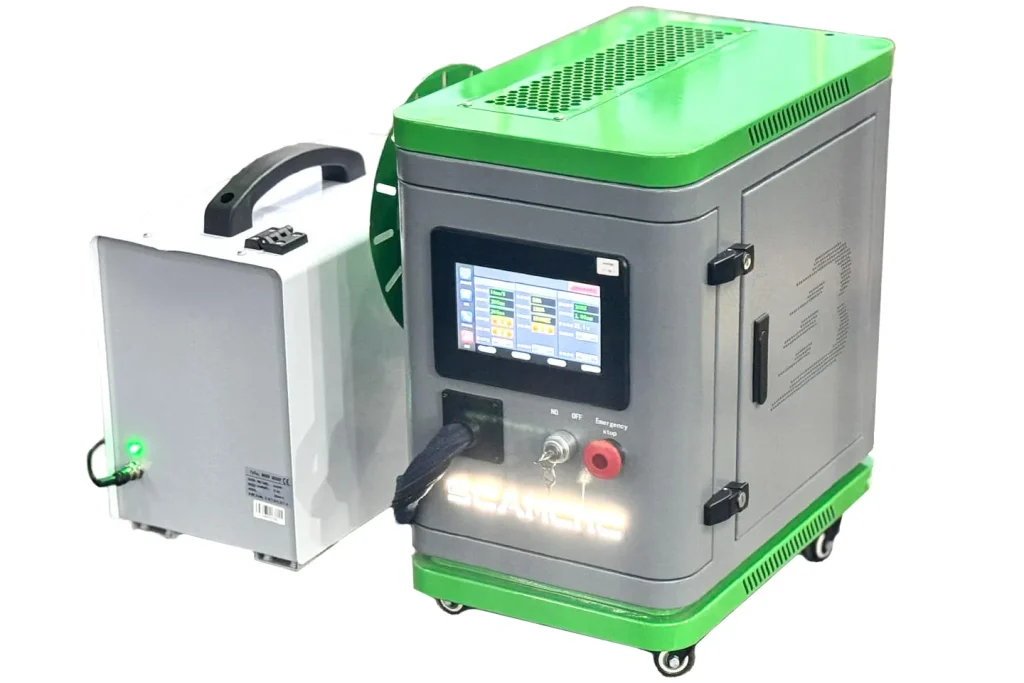
BCAMCNC’s handheld and automated welding systems are designed to support both modes, giving operators flexibility for different aluminum thicknesses and joint types.
3. Fine-Tune Welding Parameters for Strong, Defect-Free Joints
Optimizing parameters is the key to preventing pores, cracks, or uneven seam formation.
Increase Power Density for Better Fusion
A high energy concentration helps overcome aluminum’s rapid heat dissipation, ensuring stable penetration.
Adjust Travel Speed and Focus
• Too fast → shallow penetration, incomplete fusion
• Too slow → excessive heat accumulation, distortion
• Incorrect focus → porosity or unstable melt pool
A balanced combination of power, focus position, and welding speed ensures consistent weld quality.
Monitor and Adjust in Real Time
For critical production tasks, using features such as seam tracking, wobble welding, or real-time monitoring ensures better consistency across long welds.
BCAMCNC Aluminum Welding Solutions: Built for Precision and Efficiency
BCAMCNC fiber laser welders are engineered to solve the challenges of aluminum welding by offering:
• High energy stability for deeper and more consistent penetration
• Wobble welding capability to reduce porosity and improve seam appearance
• Ergonomic handheld options for flexible on-site or workshop applications
• Easy-to-use controls that shorten the learning curve for new operators
•Versatile performance for aluminum, stainless steel, galvanized steel, and other metals
Whether you’re working in fabrication, automotive repair, manufacturing, or metal product assembly, BCAMCNC provides reliable welding solutions designed to deliver strong, clean aluminum joints with minimal rework.
Final Thoughts
Laser welding aluminum requires careful preparation and parameter control, but with the right techniques and equipment, it becomes one of the most efficient and high-quality joining methods available. By following these best practices and choosing a well-designed laser welding system, manufacturers can dramatically improve productivity, weld strength, and overall consistency.