
When choosing a CNC router, the vacuum table is one of the most important parts of the whole machine. A good vacuum system helps you hold materials firmly, improves cutting accuracy, and even increases your production speed. For many workshops, the right vacuum table can decide how efficient the CNC router will be in daily work.
In this article, we will explain the main vacuum table options for CNC routers, how they work, and how to choose the best one for your needs.
What Is a Vacuum Table?
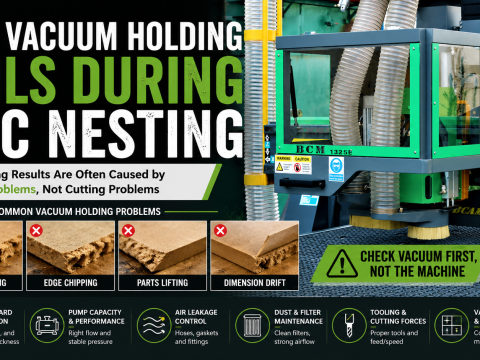
A vacuum table uses suction to hold the workpiece tightly on the machine bed. When the vacuum pump is turned on, air is pulled out from small holes on the table surface, creating strong negative pressure. This pressure keeps wood, MDF, plastic, aluminum, and other sheet materials stable during cutting.
A stable material means:
- Cleaner edges
- Faster cutting speed
- Less vibration
- More precise results
Main Vacuum Table Options
1. Zoned Vacuum Table
A zoned vacuum table divides the table into several areas (zones). Each zone can be turned on or off separately.
Advantages
- Only use vacuum where needed
- Saves energy
- Better suction for small sheets
- Suitable for mixed-size jobs
Best for: furniture production, signage, cabinet makers.
2. Full-Sheet Vacuum Table
This table uses maximum suction across the whole surface. It is simple, powerful, and ideal for large sheet materials like 4×8 ft or 5×10 ft boards.
Advantages
- Strong and stable suction
- Easy to operate
- Perfect for large-format cutting
Best for: workshops processing full-size sheets every day.
3. T-Slot + Vacuum Hybrid Table
A hybrid table combines vacuum suction with aluminum T-slots. T-slots allow you to use clamps when vacuum alone is not enough—especially for small or thick materials.
Advantages
- Flexible workholding
- Supports both vacuum and clamps
- Good for irregular shapes
Best for: mixed-material shops, prototyping, custom woodworking.
4. Grid Pattern Vacuum Table (Rubber Gasket Style)
This table uses rubber gaskets to create sealed pockets. The suction becomes extremely strong inside each pocket, making it suitable for small pieces.
Advantages
- Very strong holding force
- Great for detailed jobs
- Reduces material slipping
Best for: sign making, acrylic cutting, aluminum plates.
5. PVC Vacuum Table with Replaceable Spoilboard
Many CNC routers use a PVC table with a replaceable MDF spoilboard on top. The spoilboard becomes part of the vacuum system after surfacing.
Advantages
- Low cost
- Easy to maintain
- Good for daily production
Best for: general-purpose CNC routers.
Vacuum Pumps: Rotary Vane vs. Roots Blower
Vacuum performance also depends on the pump:
Rotary Vane Pump
- Stronger vacuum pressure
- Ideal for small pieces
- Quieter operation
- Higher price
Roots Blower
- High air volume
- Good for full-sheet cutting
- Lower price
- Louder noise
Tip:
If you process small parts → choose rotary vane pump
If you cut large sheets → choose roots blower
How to Choose the Right Vacuum Table
Here are simple guidelines:
| Your Job Type | Best Vacuum Table Option |
|---|---|
| Large sheet cutting | Full-sheet or zoned vacuum table |
| Mixed materials | Hybrid vacuum + T-slot |
| Small parts | Gasket (grid) vacuum table |
| General production | PVC table with MDF spoilboard |
| High accuracy | Vane pump + gasket table |
Why BCAMCNC Vacuum Tables Stand Out
At BCAMCNC, all our vacuum table options are designed for stable performance and long-term use:
- High-quality PVC or aluminum table structure
- Strong suction with industrial vacuum pumps
- Easy zone control for energy saving
- Smooth surface after machine surfacing
- Supports both large-format and small-piece jobs
We offer customization for different industries, including furniture, signage, metalworking, and composite materials.
Conclusion
A well-designed vacuum table is not just a standard accessory—it is one of the key factors that improve cutting accuracy, production efficiency, and material stability. By understanding the different vacuum table options, you can choose the right CNC router setup that matches your workflow and saves long-term costs.
If you need help choosing the best vacuum system for your CNC router, BCAMCNC is here to provide expert guidance and customized solutions.