
Most cabinet factories do not lose money because the machine is too slow. They lose money because the production line becomes unstable after continuous operation. One shift runs fine, the next shift starts seeing edge gaps, chipped panels, inconsistent polishing marks, or assembly complaints from installation teams. By the time management notices the rejection rate increasing, the real source of the problem is usually already buried somewhere upstream.
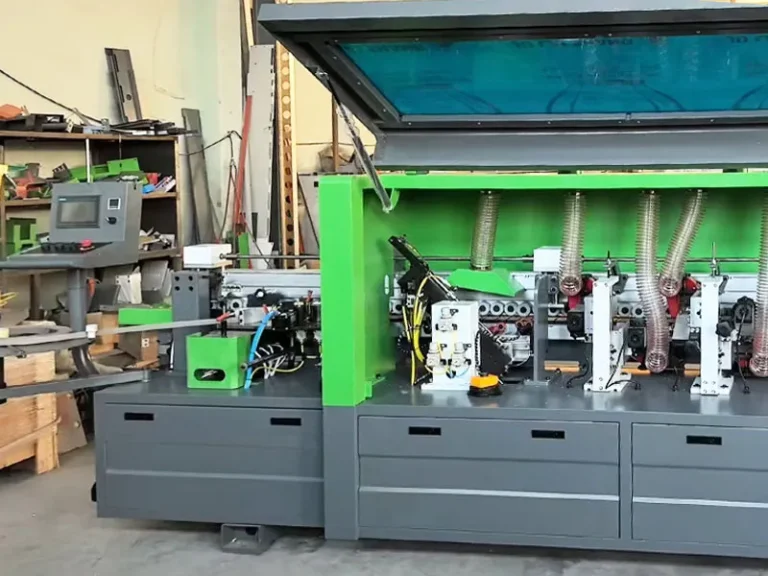
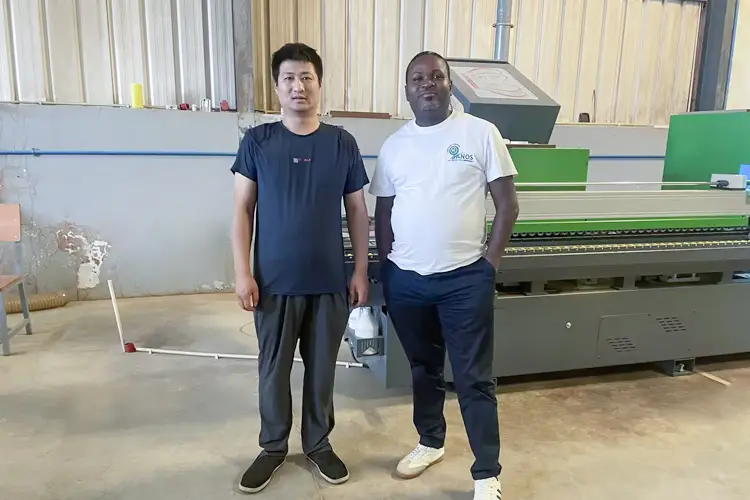
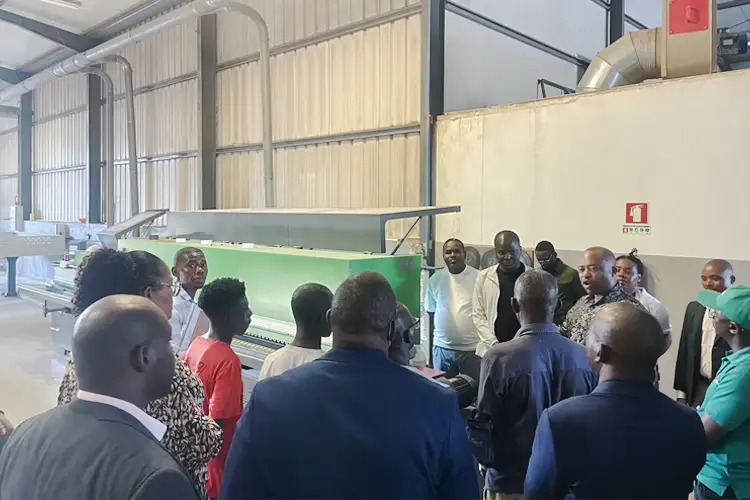
That was the main focus during a recent BCAMCNC after-sales service visit to Grupo Chicoil S.A. in Angola, where our field engineers worked with the factory team on a cabinet production project involving an electronic panel saw, sliding table saw, edge banding machine, polishing machine, and industrial air compressor system.
The machines themselves were operating normally. The bigger challenge was making the entire line remain dimensionally stable under actual production conditions instead of showroom conditions.
Why Cabinet Production Problems Usually Start Between Machines Instead of Inside Machines
Many factories purchase equipment one station at a time. The panel saw may come from one supplier, the edge bander from another, and the compressor from whoever offered the fastest delivery. On paper, every machine meets specification. On the workshop floor, process inconsistency starts appearing once all systems begin running together under load.
At Grupo Chicoil, the first step was not increasing feed speed or pushing production output. The first step was checking how the entire process chain interacted under continuous operation.
A cabinet production line is not a collection of isolated machines. It is a sequence of tolerances passing from one process to another.
If the cutting section introduces slight edge chipping or dimensional drift, the edge bander cannot fully compensate for it later. If compressed air pressure fluctuates during simultaneous machine operation, trimming pressure changes slightly. Operators then compensate manually, often without realizing the process itself is drifting.
Those small corrections accumulate through the shift.
The Electronic Panel Saw Was Stable, but Blade Condition Started Affecting Dimensional Consistency
The electronic panel saw in this project was mainly processing melamine-faced particleboard for cabinet components between 15 mm and 18 mm thickness.
The target cutting tolerance during production was within ±0.1 mm.
Early during testing, dimensional consistency was acceptable. After several hours of continuous operation, slight size variation began appearing between batches.
This was not caused by servo positioning failure.
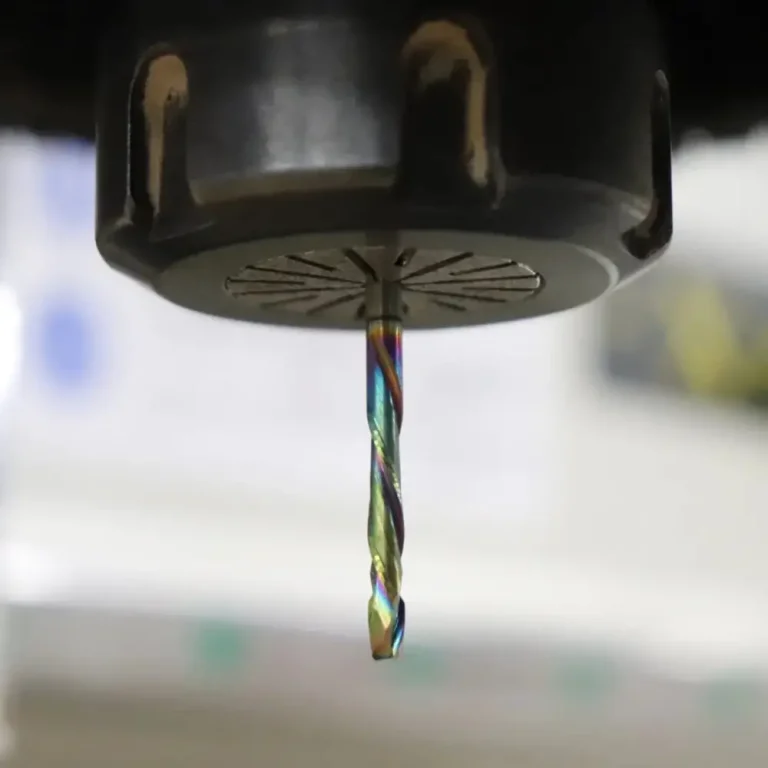
The main issue came from blade condition and cutting resistance changing gradually during production. Once blade sharpness decreases, panel feeding behavior changes slightly, especially when operators increase feed speed to maintain daily output targets.
One common workshop habit appeared almost immediately.
Instead of checking blade wear, operators started manually adjusting dimensions inside the control system to compensate for the drift.
This creates a dangerous production habit. Once operators stop trusting the programmed dimensions, every downstream process becomes harder to stabilize.
Why the Sliding Table Saw Still Matters in Cabinet Factories
A surprising number of factories underestimate the importance of the sliding table saw after investing in automated panel processing equipment.
At Grupo Chicoil, the sliding table saw remained necessary for:
- Small-batch adjustments
- Filler strips
- Rework panels
- Irregular trimming
- Onsite fitting corrections
The machine itself is simple compared with CNC systems, but small alignment errors here can create downstream problems that appear much later.
During inspection, particular attention was given to the scoring blade alignment. If the scoring blade and main blade are not aligned properly, even a very small stepped edge can create bonding instability during edge banding.
The edge may still look acceptable immediately after production. Problems begin showing several months later when moisture enters microscopic gaps along the edge interface.
This is the kind of issue customers often blame on glue quality even though the root cause started at the cutting stage.
Edge Banding Quality Depends Heavily on Temperature, Air Pressure, and Operator Habits
The edge banding machine is usually where production instability becomes visible first.
At Grupo Chicoil, initial test production showed slight glue line visibility on some dark cabinet panels. The first operator reaction was increasing glue temperature.
That approach usually creates more problems instead of solving them.
Excessive EVA glue temperature can reduce bonding stability and create brittle glue behavior over time. Instead of overheating the glue station, the better solution was stabilizing the surrounding process conditions.
Glue Temperature and Material Temperature Had to Be Balanced Together
The workshop temperature during early morning operation was significantly lower than afternoon conditions.
Cold panels absorb heat from the glue too quickly before pressure rollers fully stabilize the bond.
The adjustment work focused on maintaining a more stable operating window:
| Process Factor | Stable Operating Range | Common Workshop Mistake | Resulting Problem |
|---|---|---|---|
| EVA Glue Temperature | Approximately 185°C–195°C | Raising glue temperature excessively | Brittle glue line |
| Compressor Pressure | Around 0.7 MPa stable supply | Undersized air storage | Pneumatic response inconsistency |
| Blade Condition | Regular inspection during shift | Running dull blades to finish production | Edge chipping |
| Panel Storage | Dry and temperature-stable boards | Using cold or humid boards immediately | Weak edge bonding |
| Buffing Wheel Condition | Clean polishing surface | Overused polishing wheels | Burn marks on PVC edge |
The important point was not chasing maximum machine speed. The priority was keeping process behavior predictable over long production cycles.
The Air Compressor Became More Important Than Expected
One issue commonly underestimated in woodworking factories is compressed air quality and pressure stability.
At the Grupo Chicoil project, the air compressor system supported:
- Pneumatic pressure rollers
- Trimming units
- Cleaning functions
- Polishing equipment
- General workshop pneumatic tools
Once several systems operated simultaneously, pressure fluctuation started appearing during peak demand periods.
The pressure drop itself was not dramatic. The problem was cumulative inconsistency.
A slight pneumatic delay in trimming response may only affect one or two panels at first. After several hours, operators begin adjusting machine pressure manually to compensate. Eventually the process becomes unstable without anyone noticing exactly when it started.
Part of the after-sales work involved checking the compressed air routing system and reducing unnecessary pressure variation under simultaneous load conditions.
Polishing Quality Was Revealing Upstream Problems
The polishing machine itself was functioning normally throughout the project.
What it exposed very quickly were upstream inconsistencies.
Polishing systems are unforgiving. They immediately reveal:
- Excess glue squeeze-out
- Uneven edge pressure
- Poor trimming consistency
- Surface contamination
- Edge profile variation
One issue observed during testing involved visible marks appearing on dark matte cabinet doors after polishing.
Initially, operators suspected the buffing unit.
After tracing the production flow backward, the actual source was discovered upstream at the cutting section. The scoring blade depth on the sliding table saw had been adjusted improperly during blade replacement, creating a subtle groove near the edge profile.
Under pressure from the edge banding rollers, the PVC edge material compressed into that groove slightly, creating a visible line after polishing.
The polishing machine was not creating the defect.
It was exposing a cutting inconsistency created earlier in the process.
After recalibrating the scoring blade depth and retraining the operator on alignment checks, the issue disappeared during subsequent production testing.
The Hidden Cost Most Factories Ignore
Many factories focus heavily on machine purchase price while ignoring operational instability costs.
In real production, hidden losses usually come from:
- Rework labor
- Edge delamination claims
- Glue waste
- Excessive abrasive consumption
- Operator compensation habits
- Downtime during troubleshooting
- Inconsistent assembly dimensions
These losses rarely appear immediately after installation. They accumulate slowly over months.
That is why after-sales engineering support matters far more than many buyers initially expect.
Especially in overseas projects, environmental conditions, operator habits, humidity variation, and power stability all affect long-term production consistency.
A machine performing well during factory inspection does not automatically guarantee stable operation after six months of real production.
FAQ
Why do edge banding defects sometimes appear only after several months?
In many cases, the problem starts with cutting quality or process inconsistency rather than the glue itself. Small edge gaps, dimensional variation, or unstable bonding pressure may allow moisture penetration over time, especially in humid environments.
How important is compressed air quality in woodworking factories?
Compressed air stability is critical for edge banding, trimming, polishing, and pneumatic control systems. Moisture contamination or unstable pressure often causes inconsistent machine behavior that operators mistakenly attribute to mechanical failure.
What cutting tolerance is realistic for cabinet production?
Most cabinet factories target approximately ±0.1 mm dimensional tolerance for panel sizing. Achieving this consistently depends not only on machine specification, but also on blade condition, material stability, operator discipline, and environmental control.
Why do operators frequently compensate manually instead of solving the root problem?
Because production pressure encourages short-term fixes. Operators are usually focused on keeping output moving. Small manual adjustments temporarily hide instability, but over time they make process control more difficult.
Looking at the Production Line as a System Instead of Individual Machines
The most important lesson from projects like Grupo Chicoil is that cabinet manufacturing stability depends less on individual machine speed and more on how every process interacts over time.
A fast edge bander cannot fix poor cutting quality.
A high-precision saw cannot compensate for unstable compressed air.
A polishing machine cannot hide inconsistent edge pressure forever.
Most long-term production problems begin quietly through accumulated variation between processes.
At BCAMCNC, after-sales service work often involves solving issues that never appear in machine catalogs:
- dimensional drift,
- pneumatic instability,
- edge bonding inconsistency,
- polishing defects,
- operator compensation habits,
- and process chain reactions between machines.
For factories planning cabinet production expansion or struggling with unstable production quality after installation, evaluating the entire process chain usually delivers far better long-term results than focusing only on individual machine specifications.