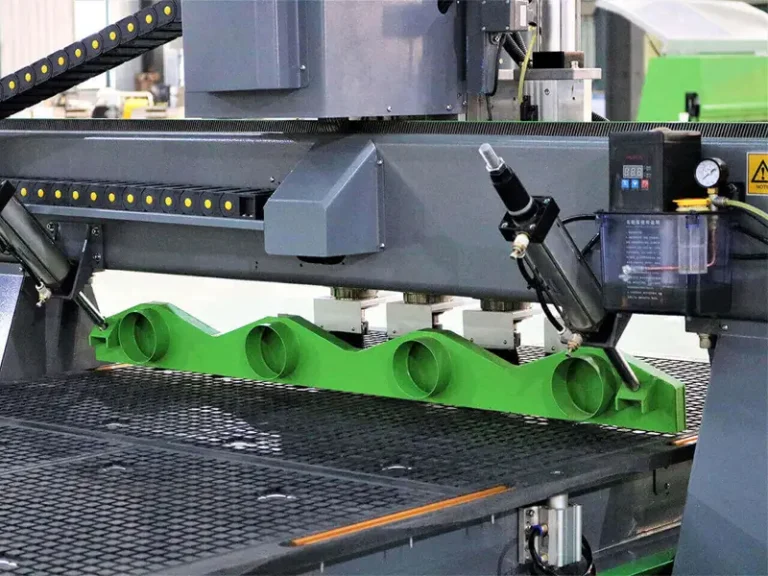

Side Hole Drilling Machine vs Six-Side CNC Drilling Machine
Choosing the right drilling equipment is a key decision for panel furniture and cabinet manufacturers. Two common options are the Side Hole Drilling Machine and the Six-Side CNC Drilling Machine.
Both machines drill holes accurately, but they serve very different production needs.
In this article, we compare these two machines in a clear and practical way to help you decide which one fits your factory best.
What Is a Side Hole Drilling Machine?
A Side Hole Drilling Machine is designed specifically for horizontal drilling on panel edges.
It is mainly used for cabinet furniture, wardrobes, and panel furniture based on the 32mm system.
Key Features
- Focused on side holes only
- Fast drilling speed
- Simple structure and easy operation
- Low investment cost
- Ideal for batch production
Side hole machines are widely used in small and medium furniture factories because they solve one major pain point: slow and inaccurate manual edge drilling.
What Is a Six-Side CNC Drilling Machine?
A Six-Side CNC Drilling Machine can drill all six sides of a panel in one cycle, including:
- Top
- Bottom
- Left
- Right
- Front
- Back
It is a highly automated CNC solution used in smart furniture production lines.
Key Features
- One-time positioning
- High automation level
- Supports complex drilling patterns
- Integrates well with nesting CNC routers
- Higher purchase and maintenance cost
Core Differences at a Glance
| Item | Side Hole Drilling Machine | Six-Side CNC Drilling Machine |
|---|---|---|
| Drilling Sides | Side edges only | All six sides |
| Automation Level | Semi / automatic | Fully automatic |
| Investment Cost | Low | High |
| Operation | Simple | More complex |
| Production Scale | Small to medium | Medium to large |
| Typical Users | Cabinet factories | Smart factories |
Production Efficiency Comparison
Side Hole Drilling Machine
- Extremely fast for repetitive side drilling
- One operator can handle multiple machines
- Perfect for standard cabinet panels
- Minimal programming required
Six-Side CNC Drilling Machine
- High efficiency for complex and mixed orders
- Best for customized furniture
- Reduces panel handling
- Requires skilled operators and software integration
If your production focuses mainly on standard cabinets, a side hole machine may actually be faster in daily use.
Cost and ROI Analysis
Cost is often the biggest deciding factor.
- Lower purchase cost
- Lower maintenance cost
- Short payback period
- Ideal for factories upgrading from manual drilling
- High initial investment
- Higher requirements for power, space, and operators
- Better ROI only at large production volumes
For many factories, starting with a side hole drilling machine is a safer and more flexible investment.
Which One Should You Choose?
Choose a Side Hole Drilling Machine If:
- You mainly produce cabinet furniture
- Your panels follow the 32mm system
- You want quick efficiency improvement
- Your budget is limited
- You prefer simple operation and fast setup
Choose a Six-Side CNC Drilling Machine If:
- You focus on custom furniture
- You run large-scale production
- You already use CNC nesting lines
- You need full automation
- You handle complex drilling patterns daily
A Practical Solution for Growing Factories
Many furniture manufacturers do not need full six-side drilling at the beginning.
In real production, a CNC router + side hole drilling machine is often a more cost-effective and flexible combination.
This setup allows factories to:
- Control investment risk
- Improve drilling efficiency
- Expand step by step
BCAMCNC works closely with panel furniture factories to provide stable side hole drilling machines that integrate smoothly with existing CNC equipment, helping customers upgrade production without unnecessary complexity.
Final Thoughts
There is no “better” machine—only the right machine for your production stage.
Side Hole Drilling Machines focus on speed, simplicity, and cost control
Six-Side CNC Drilling Machines focus on automation and complex processing
Understanding your product type, order volume, and budget will lead you to the right decision.
If you choose wisely, your drilling process will become faster, more accurate, and more profitable.