
Key Automotive Applications of Fiber Laser Cutting Machines

A clear look at how fiber laser cutting technology supports precision, efficiency, and innovation across modern automotive manufacturing processes.

1. Body Panels and Structural Frames

Every vehicle is built from a variety of metal sheets that are later formed into body panels, chassis parts, and other structural elements. Fiber laser cutting machines are ideal for this stage of production thanks to their exceptional accuracy. They ensure each component fits precisely, supporting both safety and overall structural strength.

2. Interior Components

From dashboard elements to intricate trim pieces, the interior of a modern car contains many detailed parts. Fiber laser cutting delivers the consistency and precision required to manufacture these components efficiently, maintaining high quality across mass-produced models.

3. Engine Parts

The engine is the core of any vehicle, made up of numerous parts—all requiring exact dimensions to function properly. Fiber laser cutters can process these components with high precision, helping manufacturers meet tight tolerances and contributing to engine performance, durability, and reliability.

4. Electronic Modules and Sensors

As vehicles become more intelligent, the demand for electronic systems increases—covering everything from safety sensors to infotainment modules. Fiber laser cutting plays a key role in producing the small, delicate parts used in electronic assemblies, ensuring stable performance and long-term reliability.

5. Customization and Aftermarket Manufacturing

For customized cars, limited-edition models, or aftermarket upgrades, fiber laser cutting enables flexible, efficient production of special parts. Whether creating decorative accessories or performance-enhancing components, the technology supports high-quality, small-batch manufacturing with ease.

About BCAMCNC

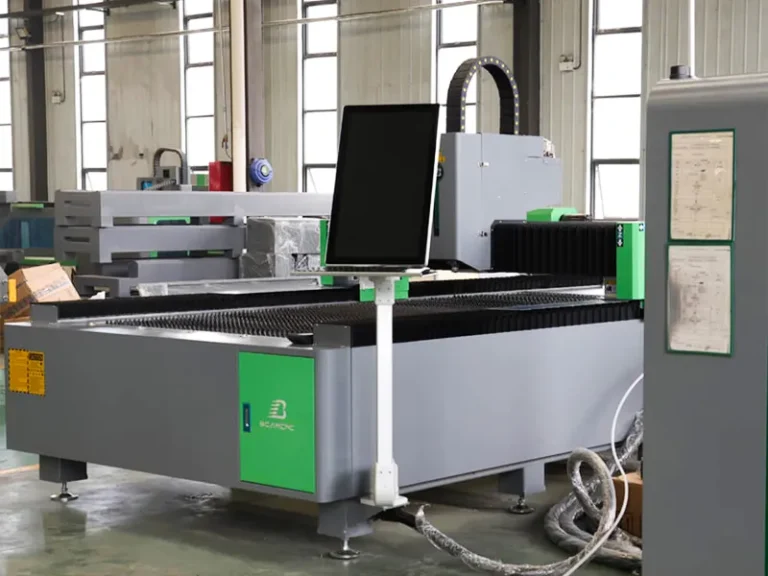
BCAMCNC provides high-performance fiber laser cutting machines designed for industrial metal fabrication, including automotive applications. With advanced features such as high-power laser options, exchange tables, and stable cutting platforms, our equipment helps manufacturers achieve faster production, cleaner cuts, and higher efficiency across both sheet and tube processing. Whether for mass production or specialized automotive components, BCAMCNC delivers reliable solutions for precision metal cutting.
Share This Article With Others

Further Reading

bcamcnc-cabinet-production-line-bosnia-project

Why European Cabinet Factories Are Moving From Standalone Machines to Full Production Lines

Most cabinet factories do not lose efficiency on the CNC router itself. They lose it between processes. This European cabinet production project built with BCAMCNC equipment shows why more manufacturers are moving from standalone woodworking machines to coordinated production lines. From six-sided drilling and curved edge banding to membrane pressing and automated material handling, the real challenge is no longer cutting speed — it is production rhythm, process stability, and reducing hidden labor costs caused by rework, material confusion, and workflow interruption.
BCAMCNC_Humanoid_Robot_Banner

5 Axis CNC Solutions for Humanoid Robot Component Manufacturing

As humanoid robot development moves from concept design to physical production, manufacturers face growing demand for multi-material machining, rapid prototyping, and complex curved component processing. This article explores how BCAMCNC 5 axis CNC routers are used for machining robot arm shells, torso covers, joint mounting structures, foam prototypes, engineering plastics, composite molds, and lightweight aluminum components in modern humanoid robot manufacturing workflows.
korean-auto-parts-supplier-composite-mold-inspection

Why a Korean Hyundai Auto Parts Supplier Switched Composite Mold Machining to a BCAMCNC 5 Axis CNC Router

A South Korean Hyundai Tier-1 supplier replaced part of its aging machining workflow with a BCAMCNC 5 axis CNC router after recurring problems with polishing workload, process instability, and unpredictable maintenance downtime started affecting mold production. This case study examines the real factory-floor issues behind the decision — including composite dust contamination, tool engagement consistency, fixture vibration, and downstream rework costs — and explains why production stability mattered more than spindle speed or brand reputation.
bcamcnc-hiteco-factory-5-axis-spindle-cooperation

Why BCAMCNC Standardized Hiteco Spindles on Its 5 Axis CNC Routers

This article explores the real spindle stability challenges behind industrial 5-axis machining, and how BCAMCNC worked closely with Hiteco’s engineering team in Italy to improve thermal behavior, vibration consistency, and unattended production reliability.

Post Your Review

Leave a Reply