
The Processing Flow and CNC Machinery for Panel Furniture
The processing flow of panel furniture can be said to be well-known to manufacturers who have been engaged in production for many years. Process changes, equipment replacement, and technology upgrades have made modern manufacturing more intelligent. So what CNC machinery and equipment can be used in the processing of panel furniture?
Modern panel furniture like cabinets, doors, etc., are all intelligently customized production, designed according to customer requirements. The products after design are visualized, allowing customers to see the effect intuitively. The design software can automatically generate blanking paths and labels, and cooperate with the blanking program to optimize cutting. At this time, the software and the CNC blanking machine need to be connected, so blanking work can be performed directly on the computer.
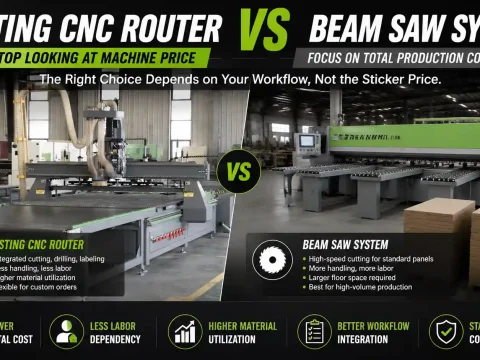
Common CNC cutting machines for panel furniture include:
-
Single-head CNC router (standard)
-
Multi-head woodworking machine
-
Multi-head start tool changer cutting machine
-
Inline type tool change machining center
-
Rotary tool change machining center
Wooden Doors, Cabinet Doors, Classical Furniture: CNC Router Process
Feeding
Feeding methods include manual feeding, conveyor equipment feeding, and manipulator feeding. For ordinary processing plants, this process is mostly manual. BCAM CNC routers support automatic loading and unloading.
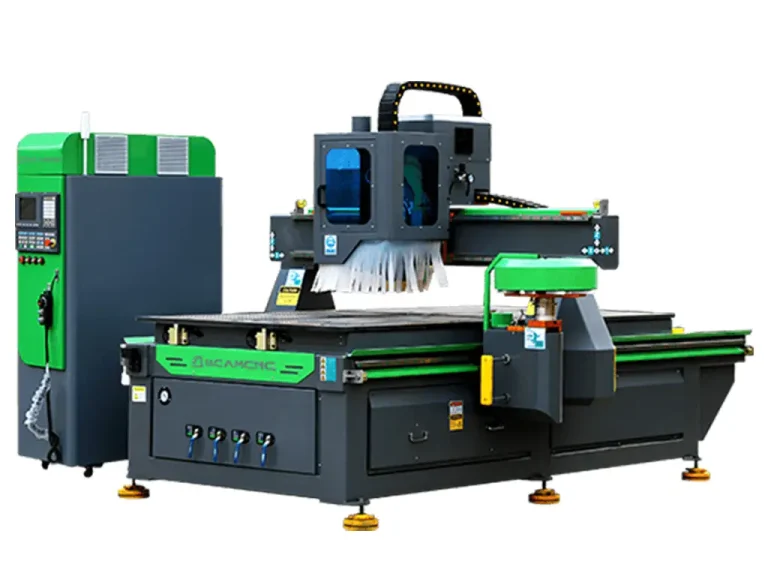
The BCM E series CNC router has:
-
Automatic loading tray lifting system
-
Automatic advance unloading transfer table
-
Strong welded steel beam frame
-
Rotary tool changer on the gantry
-
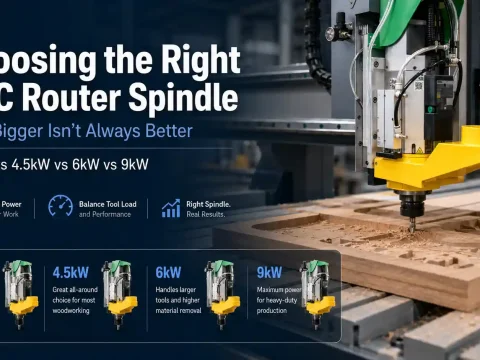
13-horsepower external spindle
-
9-axis drilling head
Like all other BCAM CNC routers, BCM1325E offers better performance, quality, and function than similar products. The E series is extremely fast; the operator only needs to stand at the end of the unloading table to unload the cut parts from the machine.
Fixing
Common fixing methods for CNC routers include:
-
Press plate fixing
-
Gun nail fixing
-
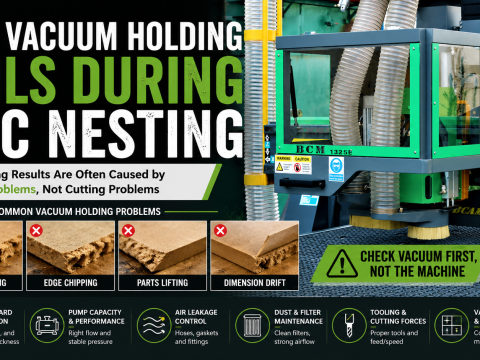
Vacuum adsorption
In terms of efficiency: vacuum adsorption > gun nail fixation > pressure plate fixation. BCAM CNC routers adopt vacuum adsorption tabletops, made with high-density materials and strong suction, easily accommodating multi-size workpieces.
Engraving
The engraving process depends on three aspects:
-
Typesetting
-
Manual typesetting: each drawing is adjusted and arranged on the engraving layout one by one
-
Automatic typesetting: software automatically arranges drawings, improving efficiency
-
-
Engraving Speed
-
Depends on the drive motor type (stepper, hybrid servo, servo) and the quality of the tool
-
Servo motors provide better torque, speed, and accuracy
-
BCAM CNC routers are mainly equipped with servo motors, customizable based on budget
-
-
Tool Change
-
Manual tool change: time-consuming, requires recalibration
-
Automatic tool change: eliminates manual height adjustments
-
Models with automatic tool change include: woodworking machining centers and multi-process CNC routers
-
Types: disc type (faster) and row type
-
BCAM offers manual tool change, in-line tool change, and disc tool change options
-
Post-Engraving Processing
Edge Banding
-
Performed using an edge banding machine after engraving and blanking
-
Types: straight edge banding and curved edge banding
-
BCAM BCF506 automatic single-sided edge banding machine completes straight edge banding efficiently, reducing production costs
-
PPT numerical control drilling system perforates the plate
-
CNC six-sided drill completes six-sided holes and grooves at once
-
Works with electronic cutters and CNC cutting machines
-
Essential for large-scale, customized panel furniture production
Laminating
-
Boards are laminated using a vacuum laminating machine
-
Features: clear finished shape, better adsorption, no edge discoloration, minimal stretch, no wrinkles, no deformation, low film breakage
-
Heater: imported nickel-chromium wire, saves 30% electricity
-
High-performance stepping system ensures workpiece stability
-
140 vacuum pump (Sino-foreign joint venture brand)
-
Automatic film cutting, frame compression, locking, and cooling (water or air options)
Assembly and Completion
After laminating, all panels can be assembled. At this point, panel furniture processing is essentially complete, and the products are transported to the end user for assembly.
This is the common processing flow of panel furniture and the CNC machinery used. BCAM is a professional CNC machinery manufacturer with over 20 years of experience in equipment production and usage. For more information, please contact our customer service – we can provide a satisfactory solution.