
The Road Ahead: The Future Potential of Fiber Laser Cutting in Automotive Manufacturing

How fiber laser technology empowers the next generation of electric, autonomous, and customizable vehicles.

The automotive industry is entering a period of rapid transformation. Electrification, advanced driver-assistance systems, and the push toward digitalized production are reshaping how vehicles are designed and built. Each major shift introduces new manufacturing challenges—and fiber laser cutting technology is becoming one of the most reliable solutions to address them.

Electric vehicles, for example, require lightweight yet durable structures to improve range and battery efficiency. Fiber laser cutting systems enable manufacturers to process high-strength steel and aluminum with exceptional accuracy, allowing the production of thinner, lighter components without compromising structural integrity.

Similarly, the rise of autonomous driving has increased the demand for precisely engineered sensor brackets, housings, and micro-components. Fiber lasers deliver the fine detailing and repeatable accuracy necessary to support these highly sensitive systems, ensuring both performance and safety.

At the same time, personalization is becoming a defining trend across the automotive market. Consumers want vehicles that reflect their identity, and production lines must adapt. Fiber laser cutting empowers manufacturers to create customized parts efficiently—whether for small-batch orders or specialized design variations—without slowing down output.

Looking Forward

As automotive manufacturing becomes more complex, fiber laser cutting is moving from a supporting role to a central pillar of the production process. It represents not just an upgrade in equipment but a fundamental shift toward smarter, cleaner, and more efficient fabrication.

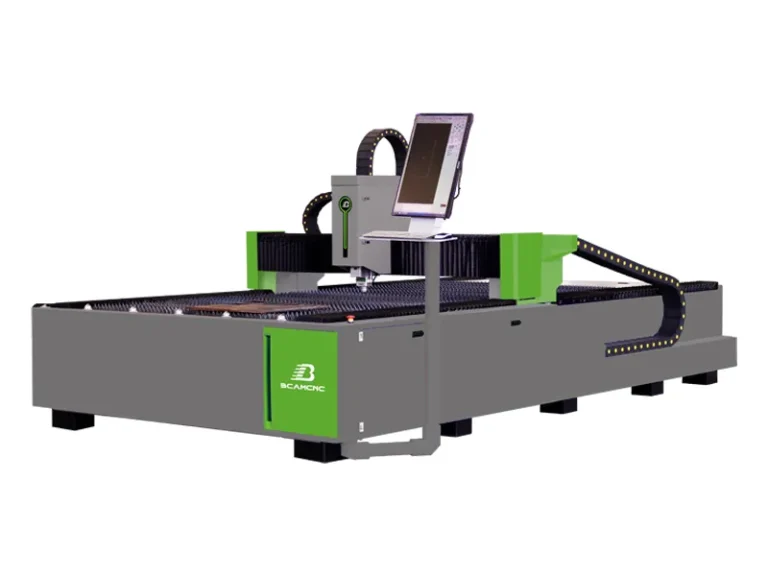
BCAMCNC’s high-power fiber laser machines are built for this new era. With robust cutting capabilities, advanced automation compatibility, full-cover safety designs, and comprehensive service support, they help manufacturers transition confidently into the next generation of automotive production. From installation and training to reliable after-sales assistance, BCAMCNC provides end-to-end support tailored to industrial needs.

Imagine what streamlined workflows, precision engineering, and future-ready technology can unlock for your automotive projects. Step into the next chapter of manufacturing—discover the transformative capabilities of BCAMCNC fiber laser cutting solutions and bring tomorrow’s innovations closer than ever.
Share This Article With Others

Further Reading

bcamcnc-cabinet-production-line-bosnia-project

Why European Cabinet Factories Are Moving From Standalone Machines to Full Production Lines

Most cabinet factories do not lose efficiency on the CNC router itself. They lose it between processes. This European cabinet production project built with BCAMCNC equipment shows why more manufacturers are moving from standalone woodworking machines to coordinated production lines. From six-sided drilling and curved edge banding to membrane pressing and automated material handling, the real challenge is no longer cutting speed — it is production rhythm, process stability, and reducing hidden labor costs caused by rework, material confusion, and workflow interruption.
BCAMCNC_Humanoid_Robot_Banner

5 Axis CNC Solutions for Humanoid Robot Component Manufacturing

As humanoid robot development moves from concept design to physical production, manufacturers face growing demand for multi-material machining, rapid prototyping, and complex curved component processing. This article explores how BCAMCNC 5 axis CNC routers are used for machining robot arm shells, torso covers, joint mounting structures, foam prototypes, engineering plastics, composite molds, and lightweight aluminum components in modern humanoid robot manufacturing workflows.
korean-auto-parts-supplier-composite-mold-inspection

Why a Korean Hyundai Auto Parts Supplier Switched Composite Mold Machining to a BCAMCNC 5 Axis CNC Router

A South Korean Hyundai Tier-1 supplier replaced part of its aging machining workflow with a BCAMCNC 5 axis CNC router after recurring problems with polishing workload, process instability, and unpredictable maintenance downtime started affecting mold production. This case study examines the real factory-floor issues behind the decision — including composite dust contamination, tool engagement consistency, fixture vibration, and downstream rework costs — and explains why production stability mattered more than spindle speed or brand reputation.
bcamcnc-hiteco-factory-5-axis-spindle-cooperation

Why BCAMCNC Standardized Hiteco Spindles on Its 5 Axis CNC Routers

This article explores the real spindle stability challenges behind industrial 5-axis machining, and how BCAMCNC worked closely with Hiteco’s engineering team in Italy to improve thermal behavior, vibration consistency, and unattended production reliability.

Post Your Review

Leave a Reply