
Some machining errors that need to be avoided during the operation of the CNC engraving machine

  In the process of using the CNC engraving machine, first of all we need to have a correct understanding and understand the general operation process, which will be of great help to users who are new to CNC equipment.

(1) Programming error: It is mainly the interpolation error produced by the numerical control system during numerical control programming. This is an important factor that affects the machining accuracy of parts. It can be solved by increasing the number of interpolation nodes, but it will increase the workload of programming.

(2) Tool tip arc error: When cutting the inner hole, external cause or end face, the tool tip arc does not affect its size and shape, but when processing the cone or arc, the tool tip arc will cause overcutting or less cut. This error can be eliminated by measuring the arc radius of the tool tip and using the tool radius compensation function.
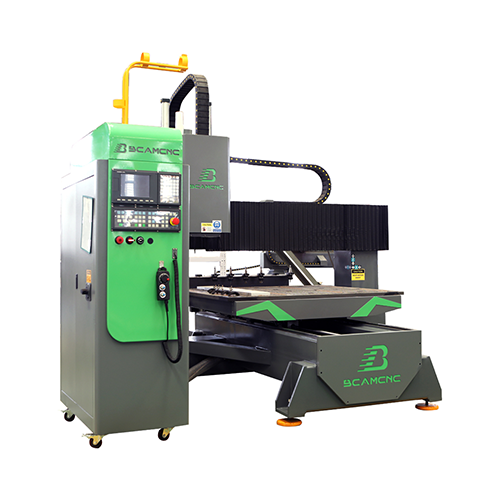
cnc engraving

  (3) Measurement error: Mainly affected by the measuring accuracy of the measuring tool and the operation method of the measurer, the actual measurement size is inaccurate. This error can be compensated.

  (4) Tool setting error: This error is mainly caused by the tool setting process. When the tool moves to the starting point position, it is affected by the feed adjustment ratio value of the operating system. The solution is to choose the feed adjustment ratio reasonably, especially when the tool is close to the starting point position, the minimum block feed adjustment is used to accurately determine the position of the starting point.

(5) Machine tool system error: the geometrical and positional tolerance caused by the influence of the machine tool body, this tolerance is generally not adjustable; the repetitive positioning error generated by the servo unit and the drive device is mainly affected by the system's pulse equivalent size, uniformity and transmission route of the machine tool; These errors are small and stable, and should only be considered during precision machining.

If you have product requirements for CNC engraving machines, you can leave your email and we will contact you later
Share This Article With Others

Further Reading

bcamcnc-cabinet-production-line-bosnia-project

Why European Cabinet Factories Are Moving From Standalone Machines to Full Production Lines

Most cabinet factories do not lose efficiency on the CNC router itself. They lose it between processes. This European cabinet production project built with BCAMCNC equipment shows why more manufacturers are moving from standalone woodworking machines to coordinated production lines. From six-sided drilling and curved edge banding to membrane pressing and automated material handling, the real challenge is no longer cutting speed — it is production rhythm, process stability, and reducing hidden labor costs caused by rework, material confusion, and workflow interruption.
BCAMCNC_Humanoid_Robot_Banner

5 Axis CNC Solutions for Humanoid Robot Component Manufacturing

As humanoid robot development moves from concept design to physical production, manufacturers face growing demand for multi-material machining, rapid prototyping, and complex curved component processing. This article explores how BCAMCNC 5 axis CNC routers are used for machining robot arm shells, torso covers, joint mounting structures, foam prototypes, engineering plastics, composite molds, and lightweight aluminum components in modern humanoid robot manufacturing workflows.
korean-auto-parts-supplier-composite-mold-inspection

Why a Korean Hyundai Auto Parts Supplier Switched Composite Mold Machining to a BCAMCNC 5 Axis CNC Router

A South Korean Hyundai Tier-1 supplier replaced part of its aging machining workflow with a BCAMCNC 5 axis CNC router after recurring problems with polishing workload, process instability, and unpredictable maintenance downtime started affecting mold production. This case study examines the real factory-floor issues behind the decision — including composite dust contamination, tool engagement consistency, fixture vibration, and downstream rework costs — and explains why production stability mattered more than spindle speed or brand reputation.
bcamcnc-hiteco-factory-5-axis-spindle-cooperation

Why BCAMCNC Standardized Hiteco Spindles on Its 5 Axis CNC Routers

This article explores the real spindle stability challenges behind industrial 5-axis machining, and how BCAMCNC worked closely with Hiteco’s engineering team in Italy to improve thermal behavior, vibration consistency, and unattended production reliability.

Post Your Review

Leave a Reply