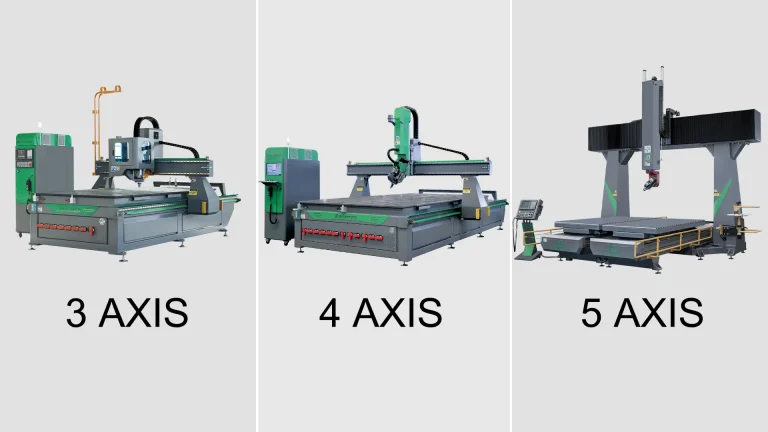

CNC router machines are now used more and more widely, but there will be problems. Here is a brief introduction to the causes of burrs in the plates processed by CNC router machines:
1、 Sharpness of tool
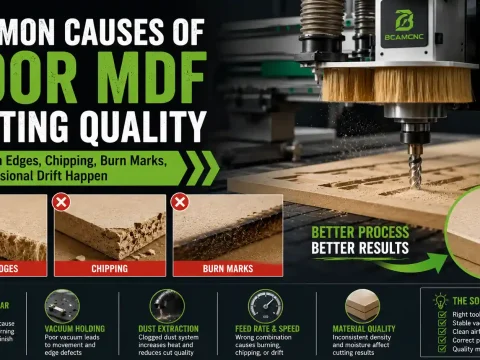
CNC engraving machine engraving is carved with a tool. The sharpness of the tool directly affects the coarseness of the engraving surface. Assuming that the sharp level of the tool is not strong, the plate opened will show edge collapse. If the tool condition is not good, it is not recommended that the engraving rate is too fast.
2、 Sheet material:
The boards used in engraving include density board and particleboard. The hardness of these two plates is relatively high, but they are widely used in the production of panel furniture because of low cost and easy processing. However, these two plates have the same problem, that is, these two plates are repressed, which means that they are not a whole. If the bonding strength is not strong, the edge will easily collapse at the moment of carving.
3、 Spindle speed
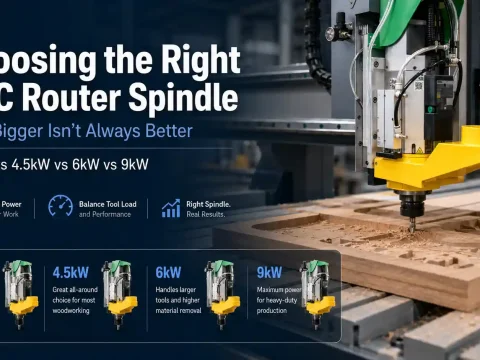
It is the same reason as the sharpness of the tool. If the spindle speed is insufficient, the plate opened by the cabinet engraving machine is abnormal and can show edge collapse. Adjust the spindle speed to a high point, but it is necessary to pay attention to adjusting it within the range that does not affect the use of the tool.
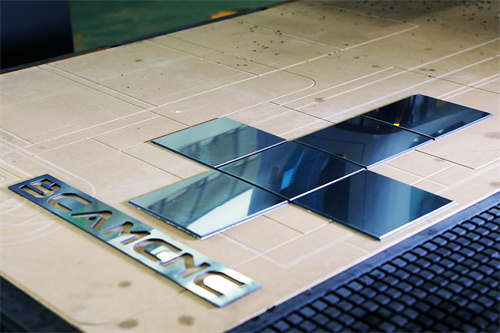
4、 Poor vacuum adsorption results
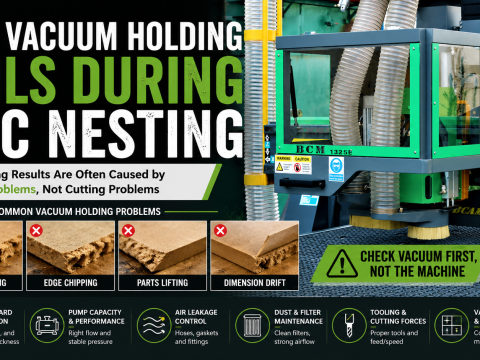
For router machines produced by some manufacturers, their vacuum adsorption table adsorption ability is not very strong. When the products are processed by the NC carpenter engraving machine, the workpiece adsorption is not consolidated, which constitutes the displacement of the plate, which is also the reason for the edge collapse of the plate. The plate is directly adsorbed on the table through the fine adsorption hole on the table. This kind of adsorption table has better adsorption results, and the force on the plate will be more uniform, which directly improves the engraving accuracy.
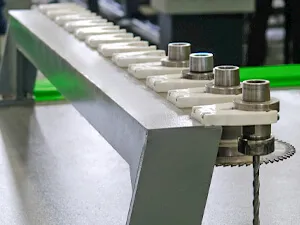
5、 Tool clamping is not firm
The tool clamping of NC engraving machine is not consolidated, which will cause edge collapse of plate and tool damage in the process of processing products
The above are the reasons that affect the burr of the engraving finished products of the engraving machine. We pay attention to these problems in use, and the processed products will not have such problems. If you encounter any other problems in the process of use, you can directly consult our on-line customer service, and we will reply to you at the first time.