
Introduction:
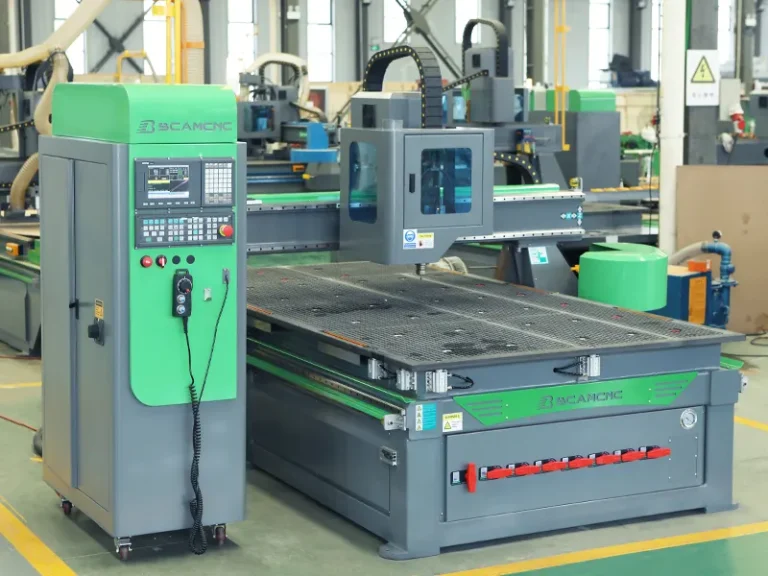
As industries demand larger molds, more complex curved surfaces, and higher machining efficiency, the 5-axis CNC router has emerged as the definitive solution. Compared to traditional 3-axis machines, it offers unparalleled flexibility for complex geometries, deep cavities, and undercuts.
For manufacturers seeking superior surface quality, maximum efficiency, and minimal manual finishing, the 5-axis CNC router is no longer an option—it is a competitive necessity.

BCAM 5-Axis CNC Router Factory — High-End Solutions Tailored for Large-Scale Molds and Complex Surface Machining.
1. Aerospace Composite Material Processing
The aerospace sector relies on lightweight materials and intricate aerodynamic profiles. Carbon fiber, fiberglass, and foam core structures require high-precision trimming and shaping.
A 5-axis CNC router is the ideal tool for:
-
Machining composite molds and foam models.
-
Trimming finished composite parts.
-
Producing high-accuracy prototypes with complex surfaces.
By eliminating multiple setups, 5-axis machining reduces repositioning errors and ensures the consistency required for flight-critical components.

Aerospace-Grade Honeycomb Mold Machining—The Ultimate Demonstration of 5-Axis CNC Router Machines Handling Complex Geometries.
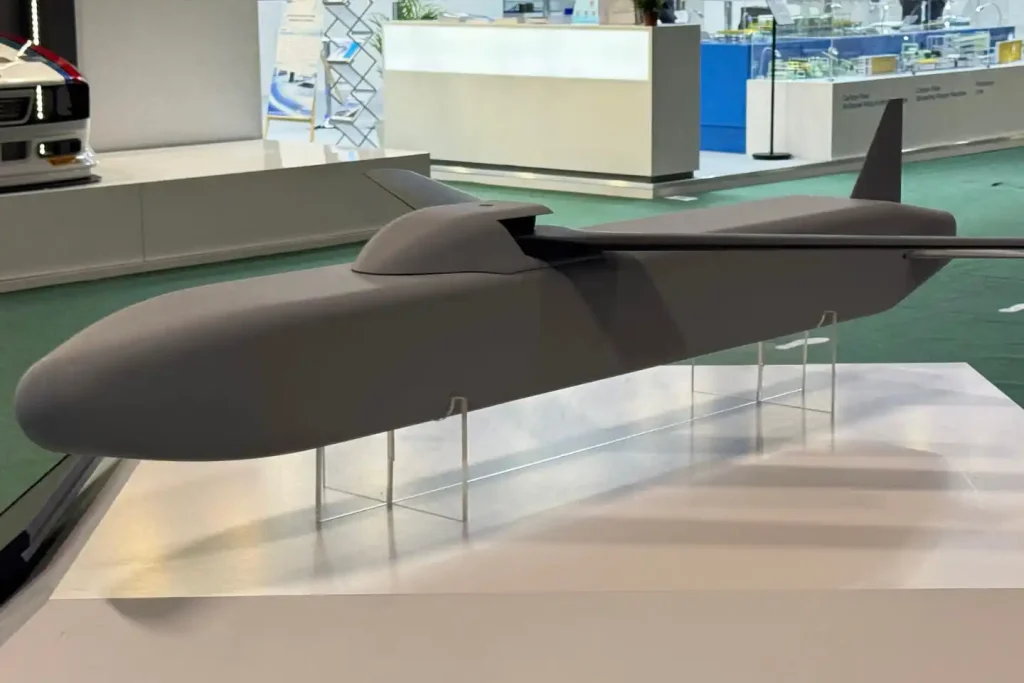
UAV Fuselage Prototype — A high-precision, complex-surface model realized through 5-axis machining.
2. Automotive Mold Manufacturing
Automotive molds—ranging from interior trim to exterior body panels—demand large-scale dimensions and exacting accuracy.
Key applications include:
-
Automotive prototype molds and checking fixtures.
-
Machining tooling boards, resin boards, and clay models.
-
Processing complex interior geometries in a single setup.
The ability to reach angled surfaces without manual intervention significantly reduces lead times and manual labor costs.
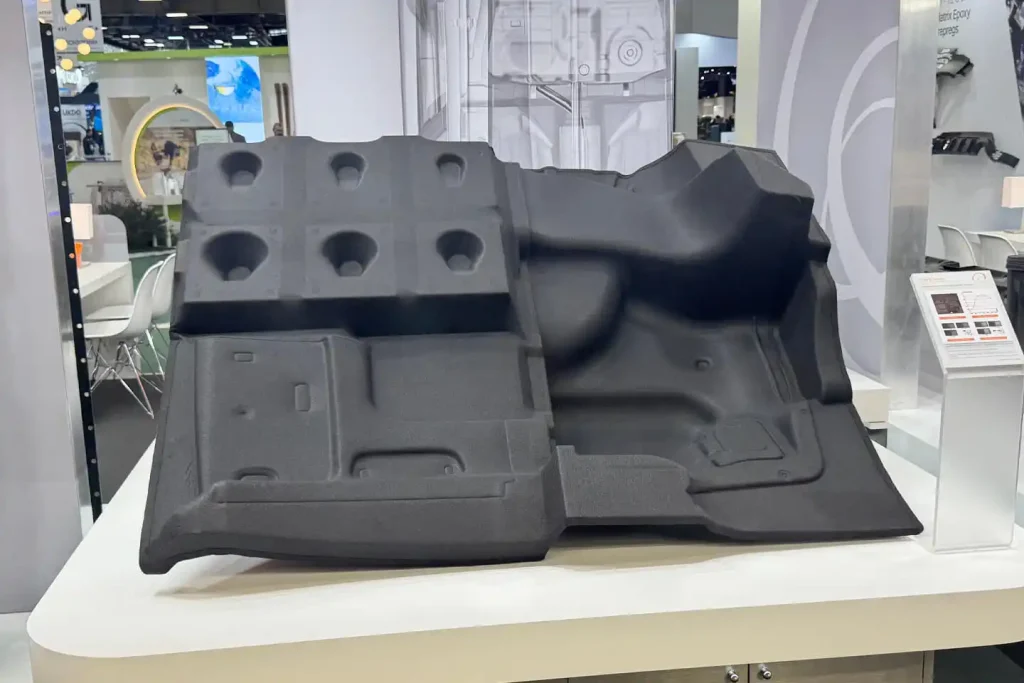
Automotive Dashboard/Interior Molds — Showcase of High-Efficiency 5-Axis Machining Results on Large Tooling Boards.
3. Yacht, Boat, and Sailboat Manufacturing
The marine industry is perhaps the most natural fit for 5-axis technology. Handling large-scale curved surfaces like hulls and decks is nearly impossible with standard machinery.
Typical marine applications:
-
Hull and deck mold machining.
-
Boat plug production and interior mold creation.
-
Composite tooling for FRP (Fiber Reinforced Plastic) parts.
For large-format marine components, 5-axis routers ensure seamless surface consistency across the entire length of the vessel.
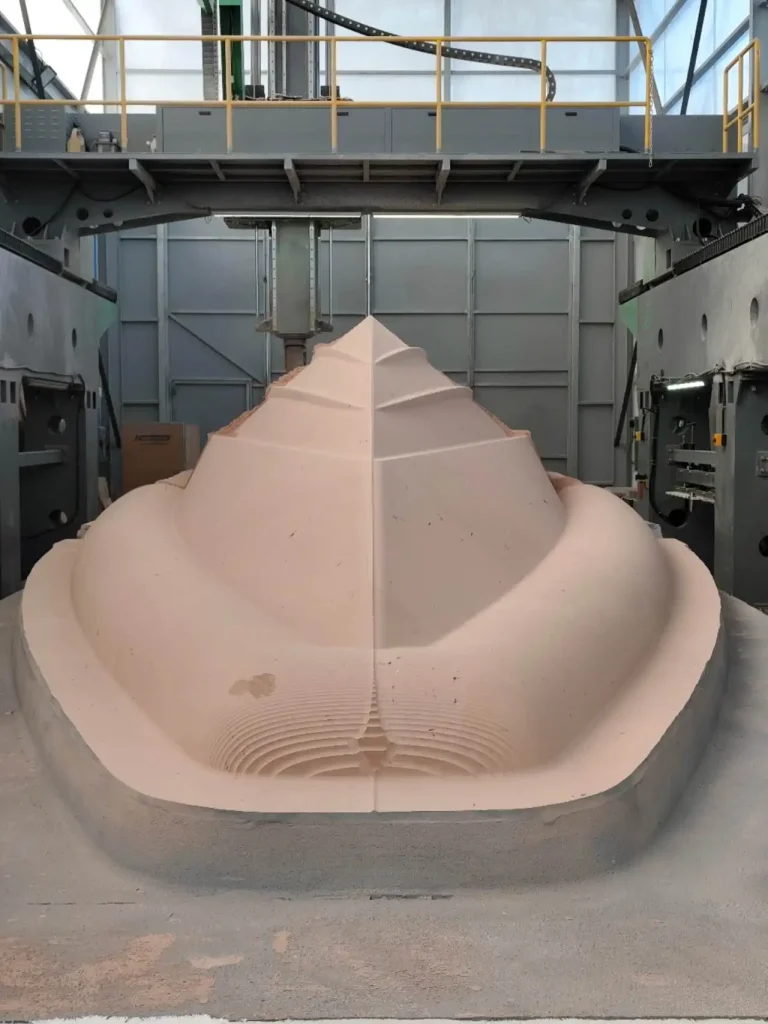
Large Yacht Hull Mold Machining — A Gantry-Type 5-Axis CNC Router Machine is performing ultra-long curved surface machining.
4. Wind Turbine Blade Mold Manufacturing
Wind turbine blades are characterized by their extreme length and complex aerodynamic twists. Achieving a smooth surface finish on such a scale is a massive industrial challenge.
The 5-axis router excels in:
-
Extra-long blade mold machining.
-
Plug and pattern production for renewable energy components.
-
Trimming large-scale composite parts.
The large-format structure of these machines allows for continuous processing of long workpieces, drastically cutting down on manual correction work.
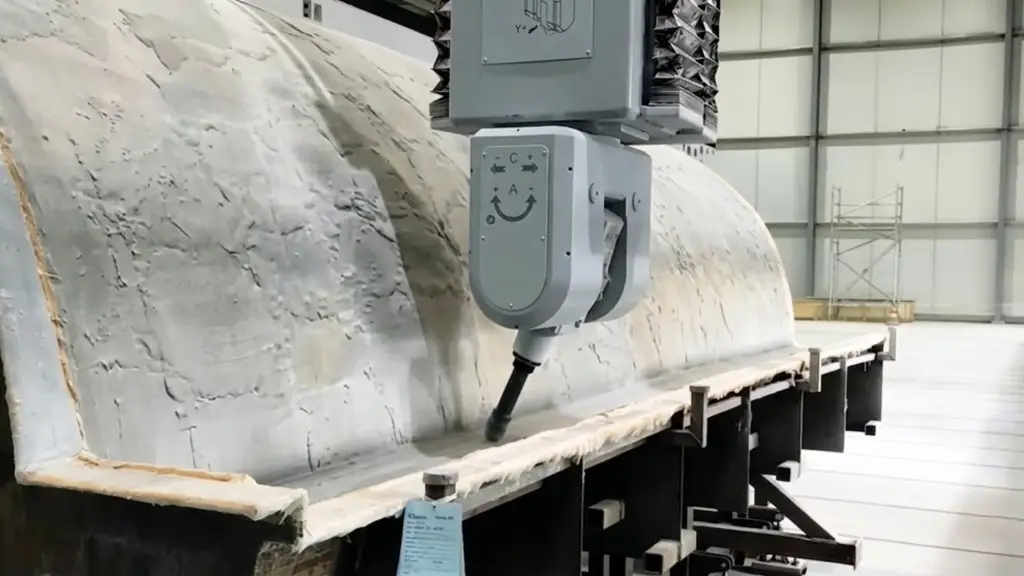
5-Axis Machining of Complex Curvatures in Wind Blade Molds
5. Composite Material Processing Factories
For contract manufacturers serving multiple sectors, versatility is the ultimate asset. A 5-axis router allows a factory to switch between diverse materials and project types effortlessly.
Supported materials and processes:
-
Materials: Foam, Resin board, Tooling board, FRP/GRP, and Carbon fiber.
-
Tasks: Trimming, mold production, and custom prototype machining.
This flexibility makes the machine a multi-functional powerhouse for any high-end composite processing facility.
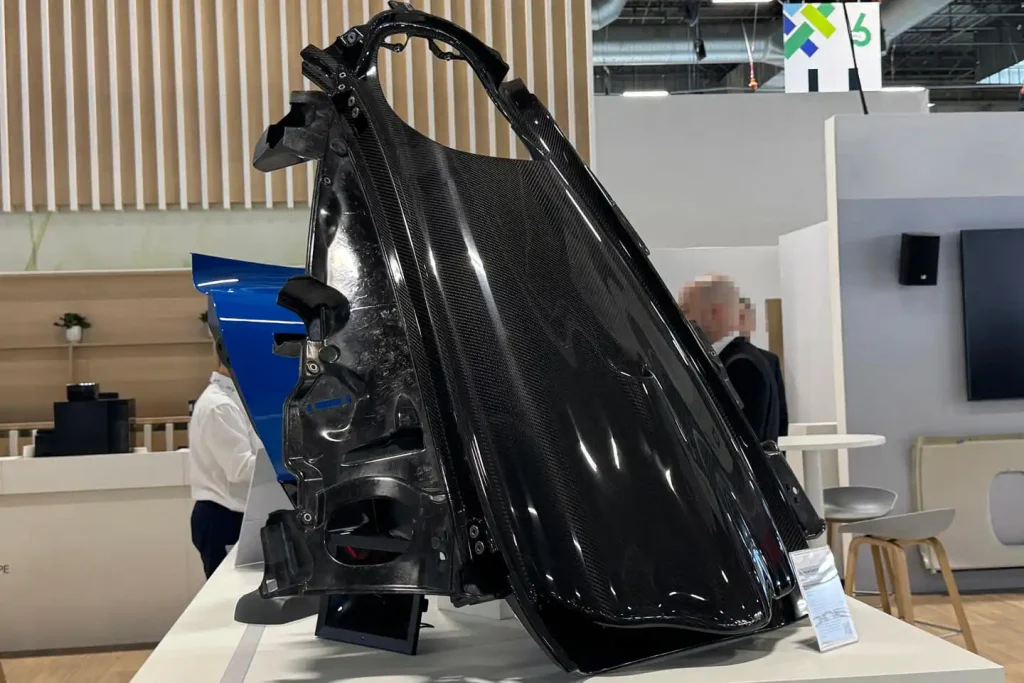
Carbon Fiber Composite Part Trimming — 5-Axis Router Machine Enables High-Precision, Burr-Free Cutting of Complex Edges.
Key Advantages of a 5-Axis CNC Router
Investing in 5-axis technology provides several strategic benefits:
-
Complex Geometry: Effortless machining of deep cavities and steep angles.
-
Efficiency: Fewer setups lead to faster turnaround times.
-
Quality: Significantly improved surface finish, reducing the need for hand-sanding.
-
Capacity: Specifically engineered for large-scale molds and long workpieces.
Conclusion
A 5-axis CNC router is more than just a cutting tool; it is a total production solution. From aerospace to marine manufacturing, it empowers companies to handle the most demanding industrial challenges with speed, precision, and consistency.
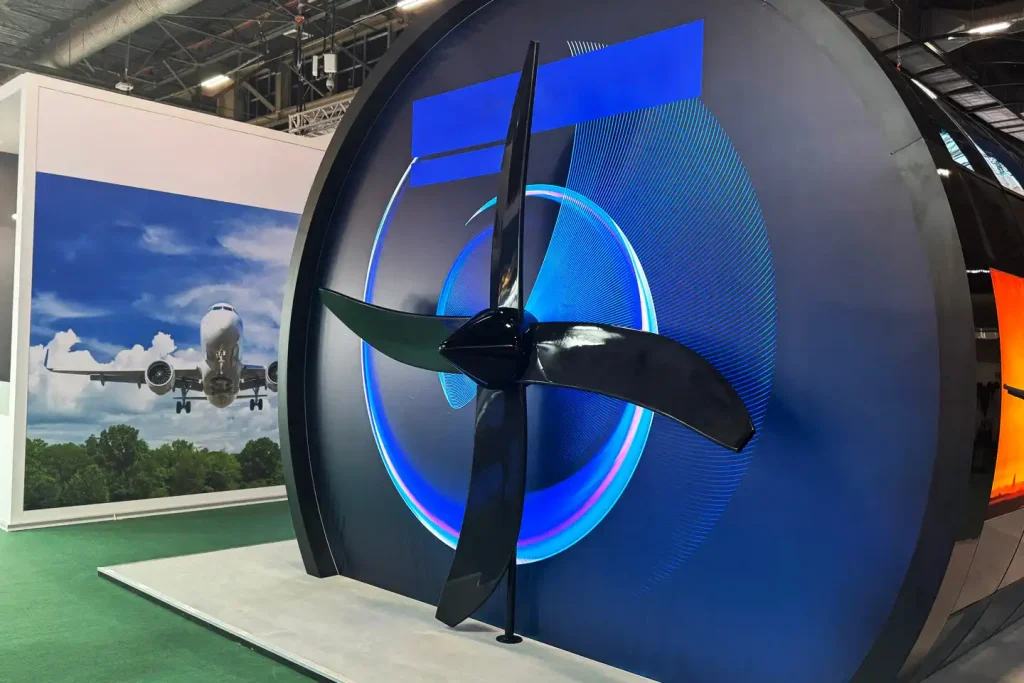
Large-Scale Propellers/Blades — Perfect Surface Finish and Dimensional Stability Achieved Through 5-Axis Machining.
For manufacturers looking to modernize their workflow and reduce manual labor, the 5-axis router represents the future of mold production. the 5 axis CNC router continues to play an important role in modern industrial manufacturing.
For companies looking to improve mold production efficiency and reduce manual finishing, choosing the right 5 axis CNC router can provide long-term value.