
Carbon fiber parts are widely used in industries that require high strength and lightweight structures. Aerospace, automotive, marine, and sports equipment manufacturers all rely on carbon fiber components for performance and durability.
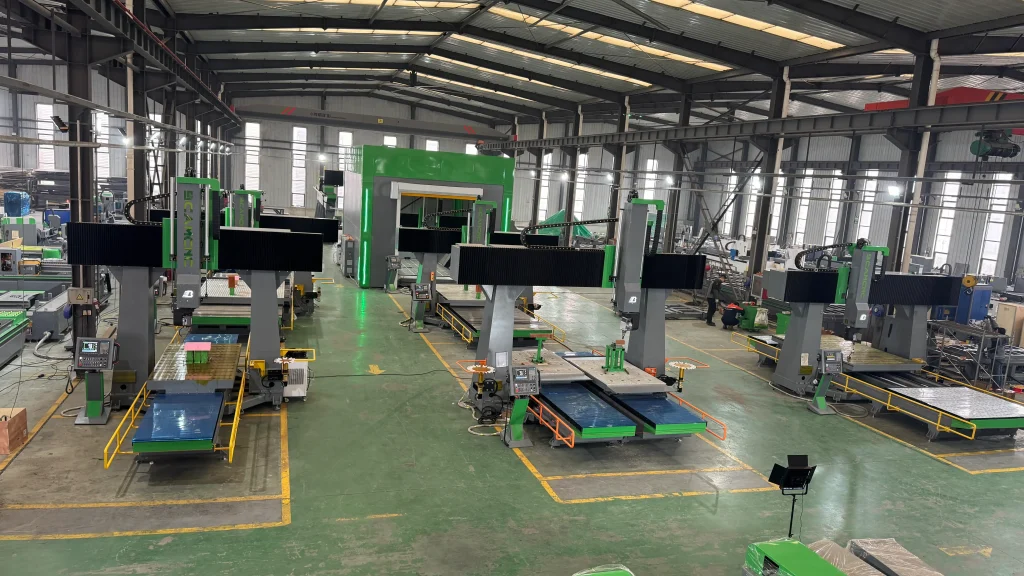
To machine these materials efficiently, many manufacturers choose a 5 axis CNC router. This advanced machining solution allows complex carbon fiber parts to be cut with high precision, smooth surfaces, and excellent consistency.
A 5 axis CNC router is especially suitable for cutting, trimming, drilling, and milling carbon fiber composite parts used in molds, structural components, and finished products.
Why Carbon Fiber Requires Advanced CNC Machining
Carbon fiber composites are strong but also sensitive during machining. The material is made from carbon fiber layers combined with resin, which means improper cutting can cause delamination, fiber pull-out, or rough edges.
Traditional machining equipment often struggles with complex carbon fiber parts because of limited movement and tool angles.
A 5 axis CNC router solves these challenges by allowing the cutting tool to approach the workpiece from multiple directions. This ensures better tool contact and more stable cutting conditions.
Advantages of Using a 5 Axis CNC Router for Carbon Fiber Parts
A 5 axis CNC router offers several advantages when machining carbon fiber composites.
First, it allows complex geometries to be machined in a single setup. Many carbon fiber components used in aerospace and automotive industries have curved surfaces and deep cavities that require multi-angle machining.
Second, the machine improves cutting precision. By controlling five axes simultaneously, the router maintains accurate tool paths and tight tolerances.
Third, surface quality is significantly improved. Proper tool orientation reduces fiber tearing and produces clean edges on carbon fiber components.
Another advantage is higher productivity. A 5 axis machine can perform trimming, drilling, and contour machining without repositioning the workpiece multiple times.
Common Carbon Fiber Parts Processed by 5 Axis CNC Routers
A 5 axis CNC router is commonly used to manufacture many types of carbon fiber parts.
In the aerospace industry, it is used to machine carbon fiber structural components, composite panels, and aircraft interior parts.
In automotive manufacturing, the machine is used to process lightweight carbon fiber body panels, aerodynamic components, and racing car structures.
Marine manufacturers also use 5 axis routers to produce carbon fiber parts for yacht structures and high-performance boats.
In addition, carbon fiber molds and tooling boards used for composite production are frequently machined using 5 axis CNC technology.
Materials That Can Be Machined Along with Carbon Fiber
Besides carbon fiber composites, a 5 axis CNC router can process many other advanced materials used in composite manufacturing.
These include fiberglass, epoxy tooling board, polyurethane foam, honeycomb panels, and lightweight aluminum structures used for molds and tooling.
This versatility makes the 5 axis CNC router a valuable solution for manufacturers working with composite materials and mold production.
Key Features of a 5 Axis CNC Router for Composite Machining
A professional 5 axis CNC router designed for carbon fiber machining usually includes several important features.
High-speed spindles provide the cutting power needed for composite materials while maintaining stable performance.
A rigid machine structure ensures vibration control and consistent accuracy during high-speed machining.
Advanced CNC control systems enable smooth multi-axis interpolation, allowing the machine to follow complex 3D tool paths.
Vacuum tables or specialized clamping systems are often used to securely hold carbon fiber sheets and composite panels during cutting.
Dust extraction systems are also important because carbon fiber machining produces fine particles that need to be removed for safety and machine protection.
Applications in Aerospace and Advanced Manufacturing
The aerospace industry is one of the largest users of carbon fiber components. Aircraft manufacturers require precise machining of composite parts used in fuselage panels, interior structures, and aerodynamic components.
A 5 axis CNC router provides the accuracy and flexibility required to produce these parts efficiently.
Other industries such as wind energy, automotive motorsports, and advanced manufacturing also rely on carbon fiber components to reduce weight while maintaining strength.
With increasing demand for lightweight materials, the need for high-precision composite machining solutions continues to grow.
Choosing the Right 5 Axis CNC Router for Carbon Fiber Machining
When selecting a 5 axis CNC router for carbon fiber parts, manufacturers should consider several factors.
Machine rigidity and stability are essential for maintaining precision during multi-axis cutting.
Spindle speed and power should match the requirements of composite machining tools.
The CNC control system should support complex 5 axis tool paths and high-speed machining operations.
It is also important to choose a reliable machine manufacturer that can provide technical support, installation guidance, and long-term service.
Conclusion
Carbon fiber components are becoming increasingly important across many industries that require lightweight and high-strength materials.
A 5 axis CNC router provides the flexibility, precision, and efficiency needed to machine these advanced composites. From aerospace structures to automotive parts and marine components, this technology enables manufacturers to produce complex carbon fiber parts with high quality and productivity.
For companies involved in composite manufacturing, investing in a reliable 5 axis CNC router is a key step toward improving machining capability and staying competitive in modern manufacturing.