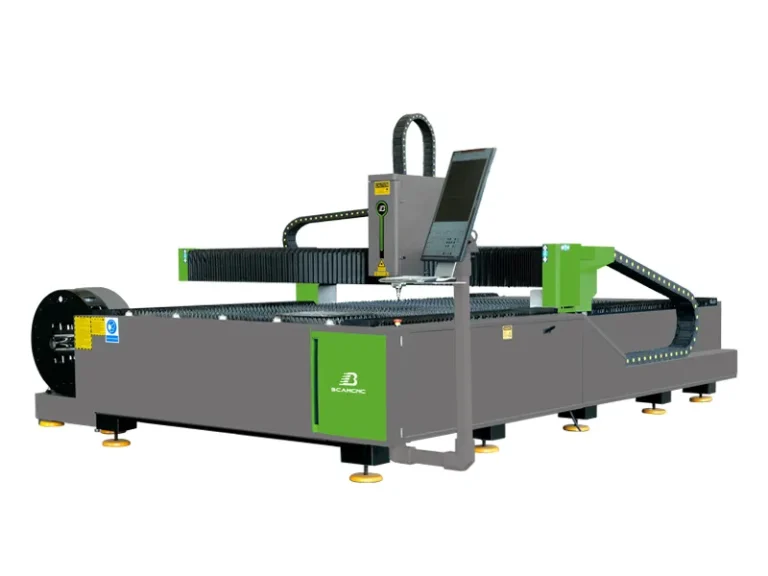

When choosing a fiber laser cutting machine, many buyers focus on cutting speed, power, or machine structure. However, one core component is often underestimated—the fiber laser source.
The laser source directly affects cutting quality, stability, operating cost, and machine lifespan. In today’s market, IPG, Raycus, and MAX are the three most commonly used fiber laser sources.
This article explains the differences between IPG, Raycus, and MAX in a clear and practical way, helping you choose the right option for your business.
What Is a Fiber Laser Source?
A fiber laser source is the “engine” of a fiber laser cutting machine. It generates a high-energy laser beam, which is transmitted through optical fiber and focused onto the metal surface for cutting.
Key factors determined by the laser source include:
- Cutting speed
- Cutting thickness
- Beam quality
- Energy efficiency
- Long-term stability
Choosing the right laser source is just as important as choosing the machine itself.
IPG Fiber Laser Source (Germany)
IPG Photonics is widely recognized as the global leader in fiber laser technology.
Main Advantages of IPG
- Extremely stable laser output
- Excellent beam quality
- Long service life
- Very low power attenuation over time
IPG laser sources are often used in high-end industrial fiber laser cutting machines, especially for continuous production and heavy-duty applications.
Typical Applications
- Automotive manufacturing
- Aerospace components
- High-precision metal fabrication
- 24/7 industrial production lines
Disadvantages
- Higher purchase cost
- More expensive replacement and repair
- Longer delivery time in some regions
Best for: Customers who prioritize maximum stability, long-term reliability, and premium performance.
Raycus Fiber Laser Source (China)
Raycus is one of the earliest and most established fiber laser manufacturers in China. It has a strong global market presence.
Main Advantages of Raycus
- Competitive price
- Good stability for most applications
- Wide power range available
- Easier maintenance and spare parts availability
Raycus fiber laser sources are commonly used in mid-range and cost-effective fiber laser cutting machines.
Typical Applications
- Sheet metal processing
- Steel service centers
- Job shops and fabrication workshops
- Small to medium production lines
Disadvantages
- Beam quality slightly lower than IPG at very high power
- Stability may vary depending on working conditions
Best for: Buyers looking for a balance between performance and cost.
MAX Fiber Laser Source (China)
MAX Photonics has grown rapidly in recent years and is now a strong competitor in the global fiber laser market.
Main Advantages of MAX
- Very attractive price
- Improved stability in recent generations
- Strong performance at medium and high power
- Good compatibility with cutting heads and control systems
MAX fiber laser sources are increasingly popular in industrial fiber laser cutting machines, especially for customers with budget control.
Typical Applications
- Carbon steel and stainless steel cutting
- Metal furniture and cabinet production
- General metal fabrication
Disadvantages
- Long-term stability still under evaluation for extreme conditions
- Brand recognition lower than IPG in some markets
Best for: Customers who want high power at a more affordable cost.
IPG vs Raycus vs MAX: Key Comparison
| Feature | IPG | Raycus | MAX |
|---|---|---|---|
| Origin | Germany | China | China |
| Price Level | High | Medium | Low–Medium |
| Beam Quality | Excellent | Good | Good |
| Stability | Excellent | Good | Improving |
| Maintenance Cost | High | Moderate | Low |
| Best Use | High-end industrial | General fabrication | Cost-effective production |
Which Fiber Laser Source Should You Choose?
There is no single “best” laser source. The right choice depends on your application, budget, and production intensity.
- Choose IPG if you need maximum stability, high precision, and long-term industrial operation.
- Choose Raycus if you want reliable performance with reasonable investment.
- Choose MAX if you focus on cost control while maintaining strong cutting capability.
A professional fiber laser cutting machine manufacturer will help match the laser source to your real production needs—not just sell the most expensive option.
Laser Source Selection Tips for Buyers
Before making a decision, consider the following:
1.What materials do you cut most often?
2.Required cutting thickness and speed
3.Daily working hours
4.Local service and spare parts availability
5.Total cost of ownership, not just purchase price
These factors matter more than brand name alone.、
Final Thoughts
The fiber laser source is the core of any fiber laser cutting machine. Understanding the differences between IPG, Raycus, and MAX helps you make a smarter investment and avoid unnecessary costs.
If you are planning to buy a fiber laser cutting machine, always evaluate the laser source, machine configuration, and after-sales support as a complete system.
A well-matched laser source will deliver stable cutting performance and long-term value for your business.