
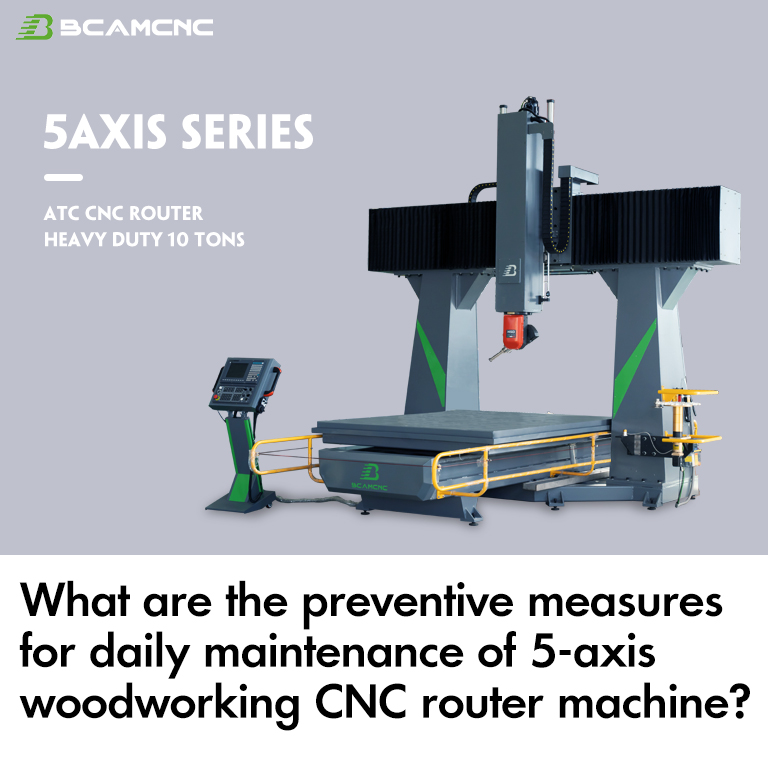
What are the preventive measures for daily maintenance of 5-axis woodworking CNC router machine?
At present, the wider application of wood processing centers, processing flexibility, high precision, and high production efficiency have many advantages. However, as technology becomes more advanced and complex, it requires high-quality maintenance personnel and requires expertise and rich experience in maintenance. 5 Axis CNC Woodworking Center Proper operation and maintenance of the proper use of a woodworking processing center is one of the main factors. Proper operation and use can prevent abnormal wear of the machine and avoid sudden failure. Conducting routine maintenance, ensuring that the device is in good technical condition, slowing down the aging process, and uncovering and eliminating potential defects that can ensure safe operation. Next, Jinan Bcamcnc will share some things. Woodworking center regular maintenance needs attention:
1、 Maintenance schedule according to equipment use. Some cnc router machines prompt the operator to perform certain maintenance tasks, but waiting for this to happen can disrupt production. When a task is scheduled in advance, it is less likely to be delayed or forgotten. The more you use your machine, the more abuse it will take, so plan your machine maintenance frequency accordingly. If you’re running a small edge bander 8 hours a day, a maintenance schedule of once every 6 months might be just right for that machine. However, if you run three shifts on the same machine, you may need to do maintenance every three months, or once or more often if you don’t have a qualified maintenance crew.
2 、Make sure that the preventive maintenance work being performed is beneficial to the equipment. For example, oiling the rack and pinion of a beam saw can cause grease, and over time, dirt hardens inside the gears, eventually making them immobile. If you are unsure which operation is advantageous for each piece of equipment, ask the person responsible for the piece of equipment.
3 、Make sure that the preventive maintenance work you are doing is beneficial to your equipment. For example, oiling the rack and pinion of a beam saw can cause grease, and over time, dirt hardens inside the gears, eventually making them immobile. If you are unsure which operation is advantageous for each piece of equipment, ask the person responsible for the piece of equipment.
4、 Buy spare parts before you need them. Contact your equipment supplier for a list of recommended spare parts. You don’t have to buy everything on the list, but when the service technician is at the factory, ask what the factory keeps. The parts you need most can usually be purchased cheaply so that downtime is minimized when needed.
5、 Let your employees learn from equipment service personnel. When technicians work on machines, look at the right people and ask questions. After a few visits to the service tech, operators will know when to troubleshoot, fix simple issues, and call for expert help. Technicians can instruct operators on competent preventive maintenance procedures to perform.
6 、Visit Documentation Services. When scheduling a maintenance visit with the equipment manufacturer, the service technician should record the inspection. It is important to document what part of the machine was checked and what service was performed, not just the date of service. Have the person in charge provide you with a copy of your inspection records. This checklist serves as a record for manufacturers and helps employees identify items that need to be inspected by themselves.
What should I do before using a woodworking machine?
Woodworking tools can be dangerous if not used properly.
Use only woodworking centers that you have been trained to use correctly and safely.
Read the owner’s manual carefully.
You must understand the instructions before using any tool or machine. If you have any questions about making things safe, ask.
CNC Wood Router Machine consists of bed frame, spindle, vacuum table or T-slot table, CNC controller, CNC operating system, CNC software, gantry, driver, motor, vacuum pump, guide rail, pinion, rack, ball screw. Collets, limit switches, power supplies and many more CNC parts and accessories.