
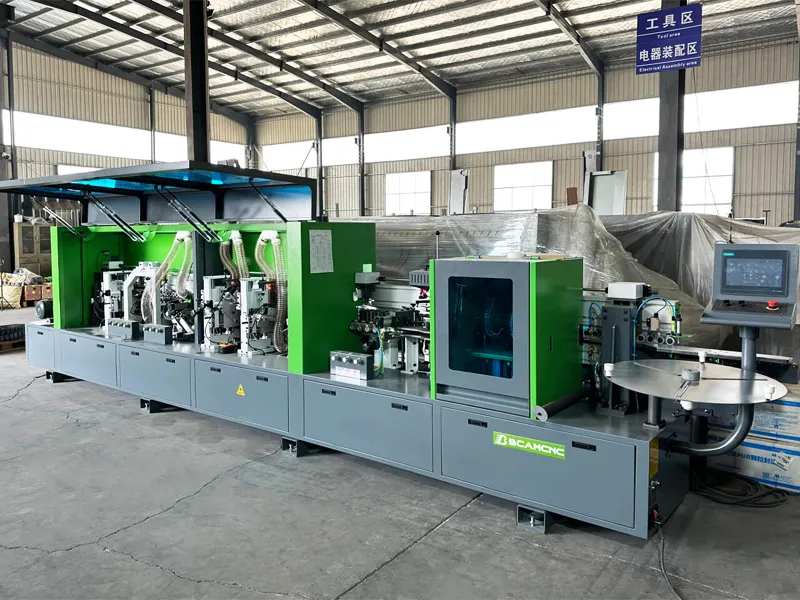
A surprising number of furniture factories buy the wrong edge banding machine for the right reasons.
They compare feed speed, motor power, glue systems, and automation levels. They negotiate price aggressively. They visit showrooms and watch perfectly prepared demonstrations.
Six months later, production managers are still complaining about edge quality, operators are constantly adjusting settings between jobs, and maintenance technicians are spending more time around the machine than they expected.
The real question is not which edge banding machine is the fastest.
The real question is whether the machine can consistently produce acceptable edge quality across the materials, shifts, operators, and production schedules that exist in your factory.
That difference determines profitability far more than the catalog specifications.
The Buying Decision Should Start with Your Production Mix, Not the Machine Catalog
Most purchasing discussions begin with machine specifications.
In reality, production requirements should come first.
A factory producing 500 identical kitchen cabinet panels every day faces completely different challenges than a custom furniture workshop processing hundreds of unique parts in small batches.
Before comparing suppliers, answer four operational questions:
- What percentage of production is batch manufacturing versus custom orders?
- What edge materials are used most frequently?
- How often do operators switch between panel thicknesses?
- What is the actual daily output requirement?
Many factories discover they only use 60–70% of the machine features they paid for, while lacking the functions that would have reduced setup time and operator intervention.
Understand Your Edge Material Before Choosing Automation Level
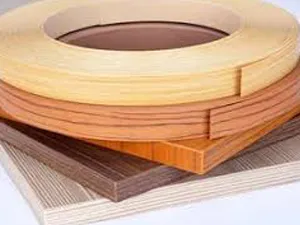
Not all edge banding materials behave the same.
PVC remains the most forgiving option.
ABS generally provides better environmental performance but can react differently during trimming and scraping operations.
Acrylic edges create higher visual requirements. Small processing errors become visible immediately.
Wood veneer introduces another layer of complexity because moisture content variation affects bonding consistency.
A machine performing well with 0.8 mm PVC edging may struggle when processing 2 mm ABS on MDF panels with varying density.
This is where many demonstration tests become misleading.
Suppliers often test under ideal conditions using premium board materials, controlled temperature, and freshly adjusted tooling.
Factory reality is rarely that cooperative.
Board Quality Often Matters More Than Machine Speed
One conversation appears repeatedly in furniture factories:
“The machine was fine during installation. Why are we seeing edge issues now?”
The answer is often hidden upstream.
Particleboard density variation, MDF moisture fluctuation, poor panel cutting quality, and inconsistent storage conditions all affect edge banding results.
An edge bander cannot compensate for a poorly prepared panel edge.
If your CNC router or panel saw leaves excessive tear-out, edge chipping, or dimensional inconsistency, the edge banding station becomes a troubleshooting center rather than a production process.
Many production teams incorrectly blame glue systems when the root cause originates from panel preparation.
The Hidden Cost of Frequent Product Changeovers
Machine brochures rarely discuss changeover losses.
Factory managers live with them every day.
Consider a workshop processing:
- 16 mm panels in the morning
- 18 mm panels after lunch
- PVC edging for one order
- ABS edging for the next
Each change introduces:
- Adjustment time
- Test pieces
- Glue waste
- Operator intervention
- Risk of setup errors
The difference between a 3-minute setup and a 20-minute setup may seem minor.
Multiply that across dozens of daily changes and the production loss becomes substantial.
For custom furniture manufacturers, setup efficiency often creates more value than maximum feed speed.
Air Supply Stability Is Frequently Overlooked
Few purchasing teams ask detailed questions about compressed air requirements.
They should.
Most modern edge banding machines require stable air pressure between 0.6 and 0.8 MPa.
Pressure fluctuations affect:
- Press roller consistency
- End trimming accuracy
- Pneumatic positioning systems
- Tool engagement
A factory with an undersized compressor may experience quality problems that appear random.
Operators compensate manually.
Quality becomes dependent on individual experience rather than process stability.
That situation usually becomes visible during night shifts.
Glue System Selection Impacts Long-Term Operating Cost
Many discussions focus on PUR versus EVA adhesive.
The choice should depend on product requirements rather than marketing trends.
| Factor | EVA Glue System | PUR Glue System |
|---|---|---|
| Initial Equipment Cost | Lower | Higher |
| Moisture Resistance | Moderate | Excellent |
| Heat Resistance | Moderate | High |
| Cleaning Requirements | Easier | More Demanding |
| Suitable for Standard Furniture | Yes | Yes |
| Suitable for Kitchens and Bathrooms | Limited | Preferred |
| Material Waste Cost | Lower | Higher |
PUR delivers superior performance in demanding environments.
However, factories producing standard residential furniture may never recover the additional investment.
The wrong glue technology can increase operating cost without creating measurable customer value.
Tooling Quality Determines Long-Term Consistency
Sales presentations focus on machine frames and automation.
Experienced production engineers often pay more attention to tooling.
Pre-milling cutters, trimming units, scraping tools, and polishing systems determine final edge quality.
Cheap tooling typically introduces:
- Increased edge chipping
- Poor corner finish
- More frequent adjustments
- Higher replacement frequency
Some factories unknowingly spend thousands of dollars annually compensating for poor tooling performance through labor and rework.
The machine itself may not be the problem.
Maintenance Accessibility Matters More Than Many Buyers Realize
Every machine requires maintenance.
The question is whether maintenance can be performed quickly.
During factory audits, one common observation appears repeatedly:
Machines with excellent technical specifications become operational headaches because routine maintenance is difficult.
Check:
- Accessibility of glue pots
- Lubrication points
- Electrical cabinet layout
- Dust extraction access
- Tool replacement procedures
A 15-minute maintenance task performed weekly is manageable.
A two-hour maintenance task performed weekly eventually gets skipped.
Skipped maintenance eventually becomes downtime.
A Real Factory Example
One mid-sized cabinet manufacturer in Southeast Asia upgraded from a semi-automatic edge bander to a fully automatic production model.
The purchasing decision focused primarily on feed speed.
The new machine was capable of 20–24 m/min.
Actual production output increased only about 12%.
Investigation revealed the bottleneck was not edge banding.
It was material handling.
Operators spent significant time sorting parts, loading panels, and organizing finished components.
The factory invested heavily in machine capacity that upstream and downstream processes could not support.
Six months later, the company added roller conveyors and reorganized workflow.
Only then did machine utilization approach expected levels.
The lesson was simple.
Production systems outperform individual machines.
Evaluating Suppliers Beyond the Machine
The supplier evaluation process should include questions that rarely appear on quotation sheets.
Ask:
- What spare parts are stocked locally?
- What is the average response time for service requests?
- Can remote diagnostics be performed?
- What preventive maintenance schedule is recommended?
- How long are critical components available after purchase?
Many factories discover the true value of a supplier only after the machine has been installed.
That is usually too late.
Signs You May Be Buying Too Much Machine
Not every factory needs a premium automatic edge banding line.
Warning signs include:
- Production below 100 panels per day
- Frequent idle periods
- Limited operator experience
- No dedicated maintenance personnel
- Inconsistent order volume
In these situations, a simpler machine often delivers better ROI.
Complexity only creates value when production volume can justify it.
Signs You Are Buying Too Little Machine
The opposite problem is equally common.
Indicators include:
- Frequent overtime
- Growing order backlog
- Excessive manual trimming
- Quality variation between operators
- High rework rates
Under-specifying equipment can become more expensive than over-investing.
The challenge is finding the balance point where automation removes bottlenecks without creating unnecessary complexity.
FAQ
What feed speed should a furniture factory look for?
For many medium-sized furniture manufacturers, a practical range is 12–18 m/min. Higher speeds only create value if upstream cutting and downstream handling processes can keep pace.
Is PUR adhesive necessary for all furniture production?
No. PUR is particularly valuable for products exposed to moisture, heat, or demanding service environments. Standard residential furniture often performs well with EVA systems.
How important is the pre-milling unit?
Extremely important. Pre-milling removes minor panel edge defects and creates a cleaner bonding surface. Many edge quality problems originate from poor panel preparation.
What compressed air pressure is typically required?
Most industrial edge banding machines operate reliably between 0.6 and 0.8 MPa, although exact requirements vary by manufacturer.
How often should tooling be replaced?
Replacement intervals depend on board material, production volume, tooling quality, and maintenance practices. Monitoring edge quality trends is more reliable than following fixed calendar schedules.
Final Thoughts
Choosing an edge banding machine is not really a machine selection exercise.
It is a production system decision.
The most successful factories rarely buy the machine with the highest feed speed or the longest feature list. They buy equipment that matches their materials, order structure, operator skill level, maintenance capability, and future growth plans.
Before requesting quotations, map your actual production flow.
Identify where time is lost.
Measure where defects occur.
Understand where operators intervene most frequently.
Once those answers are clear, the right edge banding machine usually becomes much easier to identify.
If your team is evaluating an edge banding machine, CNC router, or a complete panel furniture production line, start with the process first and the equipment second. The factories that follow that order generally make better investments and experience fewer surprises after installation.