
Explanation and suggestions on the feeding height of the stone cnc router machine. The feeding height is an important data of the cnc router machine. What is the feeding height? How much feeding height should we choose? Next, the cnc router machine manufacturer will give you a detailed explanation and suggestion how to choose the feeding height of the stone cnc router machine?
The larger thickness of the material is also called the “feeding height” of the machine. It is the vertical distance from the surface of the cnc router machine to the bottom of the beam. More strictly speaking, the feed height refers to the thickness of the material that the cnc router machine can pass through and engrave. The feeding height of the standard machine refers to the distance from the bottom of the gantry and beam to the table of the cnc router machine. The feeding height is very important. We need to determine the thickest stone and its “thickness”.
Generally speaking, for a double-headed cnc router machine, the two heads are opened at the same time, and the large engraving size of each head is half of the total engraving size of the machine. If only one head is opened, the maximum engraving size of the machine is smaller than the total engraving size of the machine, and the width of the single head and the width of the dust cover after shrinking need to be subtracted. To understand the dimensions of the machine, it is mainly to consider the size of the work site, the width of the door, and the location of the supporting facilities of the machine. The working power of the machine is three-phase or single-phase, 380 volts or 220 volts.
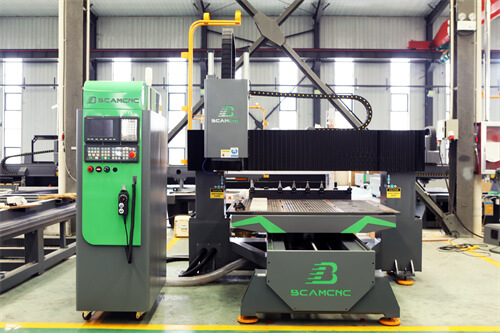
Feeding height of stone cnc router machine
For the height of the feed material, give a few suggestions to the customers who purchase the stone cnc router machine:
1. If the manufacturer did not ask you, then you must ask clearly, what is the feeding height of the machine?
2. Confirm with the manufacturer carefully how thick the material this machine can engrave is, that is, what is the engraving stroke of the machine’s Z axis.
3. The feeding height is not the bigger the better, but it is enough for use and not too big. Some customers are eager to be cheap, thinking that the higher the feed height, the less worry about not being able to engrave thick materials in the future. Excessive feeding height of the machine will cause the following disadvantages: reduced machine rigidity, increased vibration, increased load, resulting in insufficient motor torque, decreased assembly accuracy, easy tool breakage, and uneven carving.
4. The feeding heights of common stone cnc router machines are 30 cm, 40 cm, and 50 cm. Generally speaking, the feed height is greater than 50 cm, and the following measures should be taken: thickening and stiffening the machine tool material to increase rigidity; heat treatment to eliminate stress to reduce vibration and deformation; selecting large models of drive motors to increase torque or adding cylinders; assembly accuracy More demanding.
5. If the customer really needs to engrave especially thick material, two methods are generally adopted:
(1) Increase configuration and use advanced technology, such as Styrofoam cnc router machine. The advantage of this method is that the machine is of good quality and can meet the high-precision processing requirements. The disadvantage is that the price is high, which is difficult for most customers to accept.
(2) Change the design plan and choose a reasonable structure.
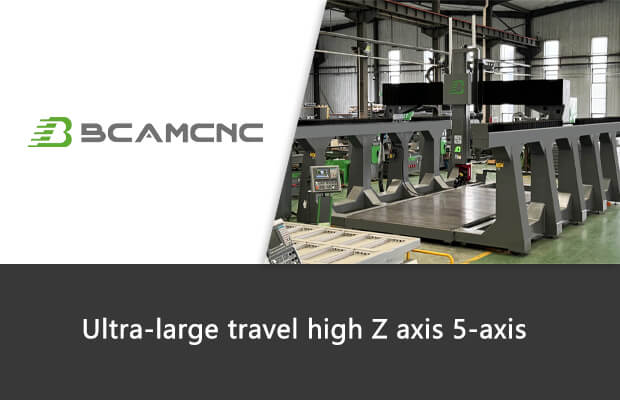
There is a lengthened stone cnc router machine, which can not only ensure the stability of conventional materials when engraving, but also solve the engraving needs of thick materials. For example, it is more convenient for some customers to engrave stone lotus bases, formed stone tables, thick piers, etc.
Some customers may be worried about the leveling of thick materials. The material is so large, can it be leveled? You can use the engraving treasure to perfectly solve the problem of uneven stone. It can be used for flat or curved surfaces.
6. Of course, there are also some cnc router machine designs that are more reasonable. You need to analyze the pros and cons and find a machine that suits you.
The above are the explanations and suggestions on how to choose the feeding height of the stone cnc router machine. I hope it will be helpful to everyone.