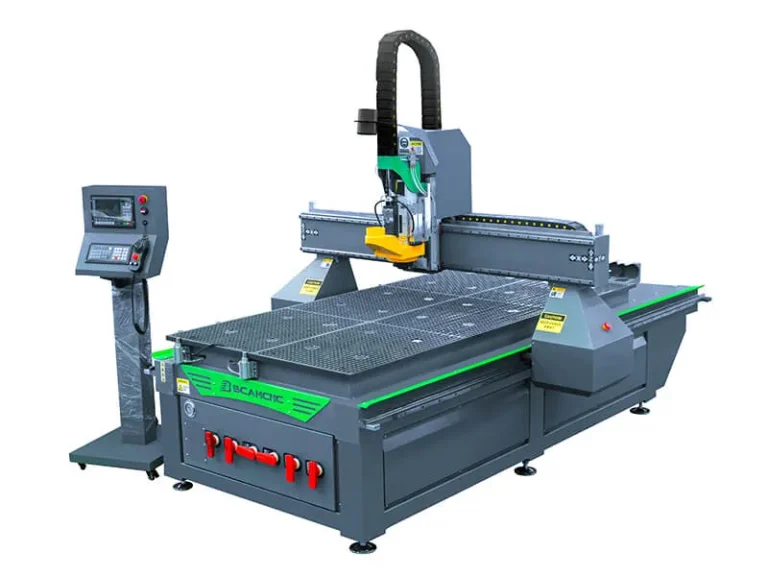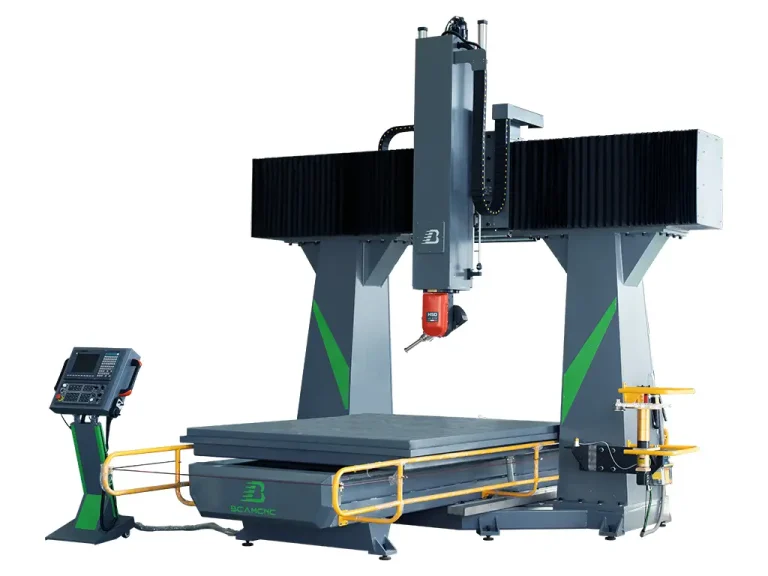

The stone cnc router machine is a processing system that can load the CNC engraving program and automatically control the movement of the cnc router machine. It usually consists of an engraving program calculation system and a numerical control system. Its working principle is: the computer digitizes the required engraving graphics through the engraving software, generates the engraving program of each step (usually G code, HPGL format file), and transmits it through the USB interface or other data transmission interfaces (RS232, RS485, etc.) To the control system, the control system uses a specific algorithm to convert the input path information into numerical control information. The controller converts this information into a signal (pulse train) that drives a stepper motor or a servo motor, and controls the cnc router machine X, Y, z Three-axis feed. At the same time, the high-speed rotating spindle of the stone cnc router machine drives the tool equipped according to the processing material to mill the workpiece fixed to the machine body, which can engrave various flat or three-dimensional graphic characters designed on the computer. Realize the automatic processing of engraving.
The overall plan design of the stone cnc router machine control system
Known from the design index of this system, its goal is to design and develop a set of control features for stone cnc router machine, which can meet the control needs of stone cnc router machine and has a popular mid-range embedded cnc router machine numerical control system with high cost performance. Therefore, the system needs to start with speed, focusing on solving the problem of rapid movement, while taking into account the manufacturing cost of the system, so that the hardware cost is controlled within the expected range. It can be seen that the processing speed and cost control of the system are the key points that should be considered in the design of this system.
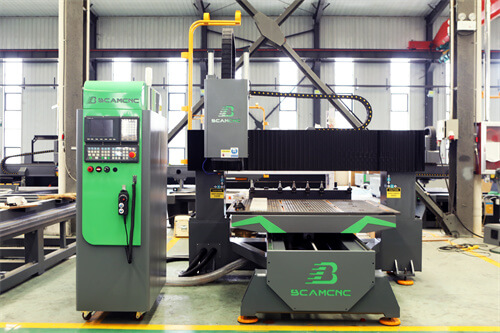
According to the current development level of CNC technology, there are currently several ways to improve the processing speed of the CNC system:
1) PC+ high-speed motion control card;
2) An industrial control board composed of high-performance general-purpose CPUs, such as X86, Pentium, etc.;
3) High-speed motion control chip;
4) Use ARM and other high-performance microcontrollers to replace high-speed motion control chips;
The above is the overall structure and working principle of the stone cnc router machine we are talking about today. If you have any other questions, you can directly consult our online customers. BCAM will serve you wholeheartedly.