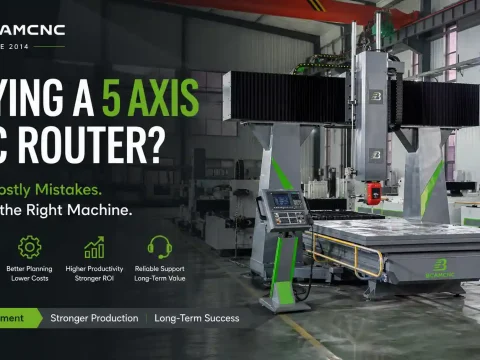

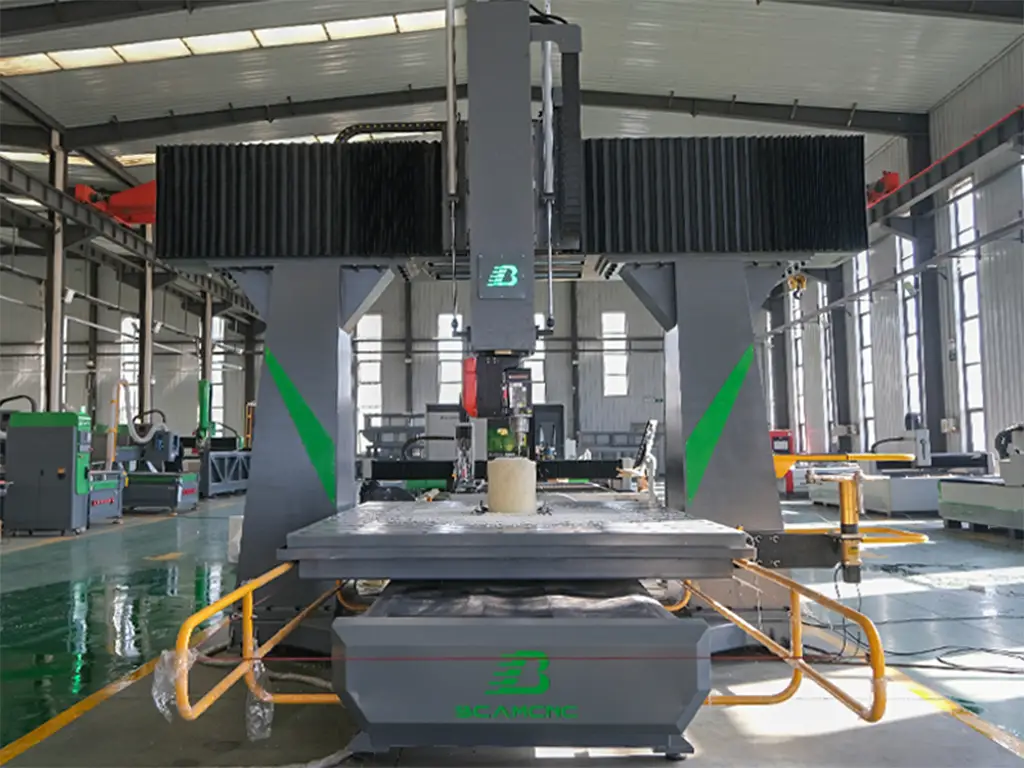
Buying a 5 axis CNC router is a long-term production decision, not simply an equipment purchase. Many factories spend months comparing spindle power, travel size, or price, only to discover after installation that the machine does not match their actual production requirements.
In our experience, the most expensive mistakes rarely come from buying a machine with poor specifications. They usually come from choosing a machine that doesn’t fit the materials, production workflow, software environment, or future business plans.
A 5-axis CNC router should improve productivity, machining quality, and manufacturing flexibility. If those goals are not achieved, the problem is often the purchasing decision rather than the machine itself.
Looking Only at Spindle Power
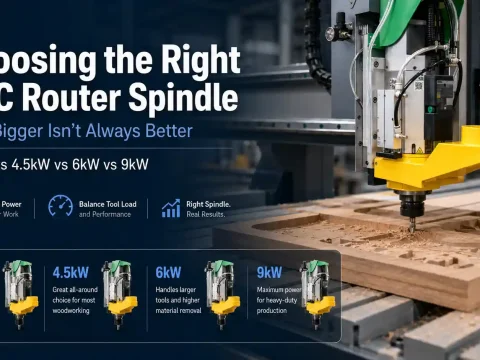
One of the most common misconceptions is that a larger spindle automatically means better machining performance.
Spindle power certainly matters, but it should always be matched to the application.
For example:
- Foam and tooling board machining generally requires high spindle speed rather than extremely high torque.
- Composite materials often require stable cutting conditions and effective dust extraction instead of maximum spindle power.
- Aluminum machining depends on machine rigidity, tooling strategy, cooling method, and cutting parameters just as much as spindle output.
A 12 kW spindle operating under poor cutting conditions will not outperform a properly configured lower-power spindle working within its ideal operating range.
Choosing spindle specifications without considering the intended application often increases purchase cost without improving production efficiency.
Ignoring the CNC Controller and Software
The CNC controller determines how smoothly a five-axis machine performs coordinated movement.
Buyers often compare machine frames while paying little attention to the controller, CAM software compatibility, or post processor quality.
In daily production, these factors directly influence:
- Toolpath accuracy
- Surface finish consistency
- Machining efficiency
- Operator learning curve
- Program reliability
A high-quality mechanical structure cannot compensate for unstable motion control or an unsuitable post processor.
Before purchasing a machine, buyers should confirm that their CAM software can generate reliable programs for the selected controller and that technical support is available during commissioning.
Confusing Positioning Accuracy with Production Accuracy
Machine catalogs often emphasize positioning accuracy and repeatability.
While these values are important, they represent controlled testing conditions rather than everyday factory production.
Actual machining accuracy is affected by many variables, including:
- Material stability
- Tool wear
- Machine calibration
- Thermal expansion
- Fixture rigidity
- Cutting strategy
- Machine maintenance
Two factories using identical machines may achieve different machining results because their production conditions differ.
Rather than focusing on a single specification, buyers should evaluate the entire machining process.
Overlooking Machine Rigidity
Five-axis machining generates complex cutting forces from multiple directions.
Machine rigidity directly influences:
- Surface finish
- Vibration control
- Tool life
- Dimensional consistency
A machine designed for foam machining may not be suitable for heavy aluminum cutting.
Likewise, a heavy-duty mold machine may not provide the productivity advantages required for lightweight composite production.
Machine structure should always match the primary application instead of pursuing the highest possible specification.
Buying Only for Today’s Production
Many investment decisions are based entirely on current production requirements.
This can become a limitation only a few years later.
Questions worth considering include:
- Will larger molds be produced in the future?
- Will composite machining become part of production?
- Will customers require higher precision or more complex geometry?
- Will automation be added later?
Selecting the smallest acceptable machine may reduce the initial investment but increase replacement costs if production expands.
Underestimating Operating Costs
The purchase price is only one part of the investment.
Long-term operating costs may include:
- Tool holders
- Cutting tools
- Vacuum pumps
- Air compressors
- Dust collection systems
- CAM software licensing
- Preventive maintenance
- Replacement consumables
A lower machine price does not always translate into a lower total cost of ownership.
Factories should evaluate equipment over several years of operation rather than comparing quotations alone.
Service Support Is Part of the Machine
When production stops, technical support becomes as important as the machine itself.
Before placing an order, buyers should understand:
- Remote technical support availability
- Spare parts supply process
- Response procedures for machine alarms
- Software update support
- Training resources
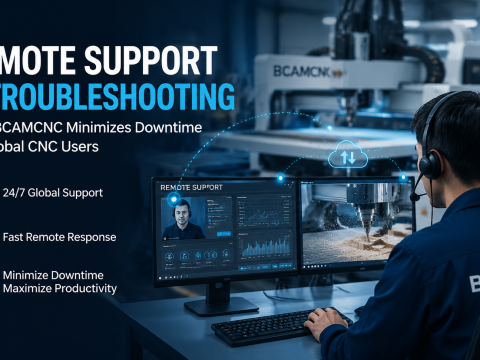
In many situations, rapid remote troubleshooting can restore production much faster than waiting for on-site service.
Support capability should be considered part of the overall investment.
Application Matching Is More Important Than Maximum Specification
No single 5-axis CNC router is ideal for every industry.
Different applications place different demands on the machine.
For example:
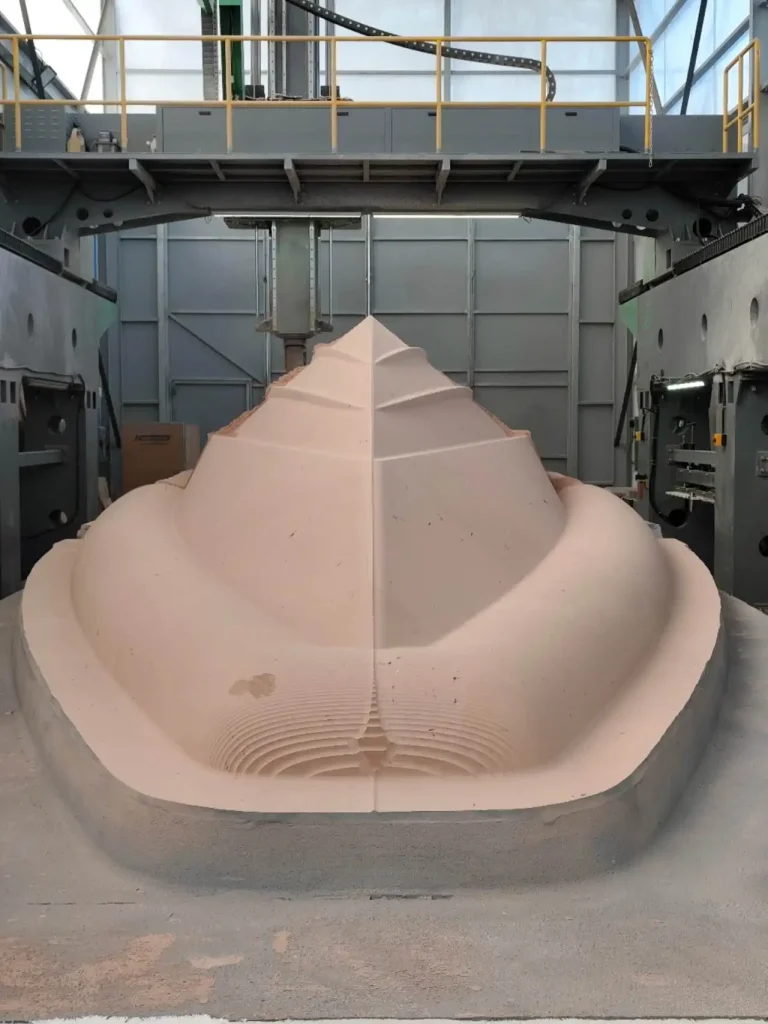
Requires high rigidity, dimensional accuracy, and stable continuous machining.

Places greater emphasis on dust extraction, cutting strategy, and lightweight material handling.
Woodworking
Focuses on productivity, surface quality, and efficient tool management.
Prototype Manufacturing
Benefits from flexibility, frequent setup changes, and compatibility with multiple materials.
Selecting a machine based on the primary application usually delivers better long-term results than simply choosing the most expensive configuration.
Comparison: Common Buying Mistakes
| Buying Focus | Better Evaluation Method |
|---|---|
| Highest spindle power | Match spindle characteristics to material and cutting process |
| Lowest purchase price | Compare total ownership cost over the machine’s service life |
| Positioning accuracy only | Evaluate complete machining performance under production conditions |
| Largest working area | Consider current production plus reasonable future expansion |
| Machine specifications only | Assess controller, software, service, and application compatibility |
Real Factory Case
A composite tooling manufacturer planned to expand production and initially selected a heavy-duty 5-axis CNC router designed primarily for aluminum machining.
After reviewing their production drawings, it became clear that more than 80% of their work involved polyurethane tooling board and carbon fiber mold production.
The heavier machine would have increased investment and operating costs without providing significant production benefits for their primary applications.
After reevaluating the material mix, machining strategy, and future production plan, the company selected a machine configuration better suited to composite manufacturing while retaining sufficient capability for occasional aluminum work.
The decision reduced unnecessary investment and aligned the equipment more closely with long-term production needs.
Frequently Asked Questions
Should I buy the most powerful spindle available?
Not necessarily. The spindle should match the materials, tooling, and cutting strategy used in production rather than simply providing the highest power rating.
Is machine accuracy determined only by the manufacturer’s specifications?
No. Actual machining results are influenced by tooling, materials, calibration, maintenance, and machining strategy in addition to machine specifications.
Should I consider future production when selecting machine size?
Yes. Reasonable planning for future product development can help avoid premature equipment replacement, although machine selection should still be based on realistic production forecasts.
How important is remote technical support?
For many international manufacturers, timely remote support can significantly reduce downtime by helping operators diagnose and resolve common production issues before on-site service is required.
Final Advice Before You Place an Order
A successful 5-axis CNC router investment is rarely determined by the machine with the highest specifications or the lowest quotation.
The best choice is the machine that fits your materials, production workflow, machining requirements, software environment, and long-term business goals.
Before making a final decision, evaluate the complete manufacturing process—not just the machine itself. Understanding your production challenges, future capacity requirements, and technical support expectations will help ensure that your investment continues to deliver value long after installation.