
If you are buying a CNC wood router expecting it to automatically solve production bottlenecks, reduce labor costs, improve quality, and increase output at the same time, you are setting yourself up for disappointment.
A CNC wood router is not a profit-generating machine by itself. It is a production tool that amplifies both good and bad processes. In a well-organized factory, it can dramatically improve consistency, reduce manual operations, and support higher throughput. In a poorly managed workshop, it can simply produce defective parts faster.
After years of visiting cabinet manufacturers, furniture factories, door producers, sign shops, and industrial pattern makers, one observation remains consistent: the most successful CNC router installations are rarely the fastest machines. They are the machines integrated into stable workflows with proper tooling, material control, dust extraction, and operator discipline.
The machine itself is only one part of the system.
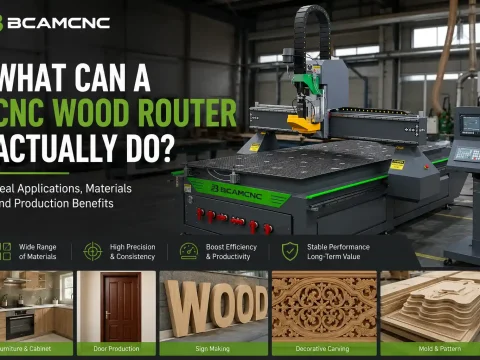
What a CNC Wood Router Actually Does
At its core, a CNC wood router performs three functions:
- Material removal
- Positioning accuracy
- Process repeatability
The first function is easy to understand. The second and third are where factories usually make or lose money.
A worker can manually cut a panel to size. What becomes difficult is producing hundreds of identical parts over multiple shifts while maintaining consistent dimensions, edge quality, and assembly fit.
That is where a CNC wood router creates value.
Common Materials Processed on a CNC Wood Router
Most buyers associate a CNC wood router with solid wood processing. In reality, many machines spend most of their working life cutting engineered materials.
| Material | Typical Thickness | Common Applications | Production Considerations |
|---|---|---|---|
| MDF | 9–30 mm | Cabinets, furniture panels | Generates significant dust |
| HDF | 3–18 mm | Decorative panels | Dense material increases tool wear |
| Plywood | 9–25 mm | Furniture, construction components | Risk of tear-out if tooling is incorrect |
| Particle Board | 15–25 mm | Modular furniture | Requires proper chip evacuation |
| Solid Wood | Variable | Doors, furniture, decorative parts | Grain direction affects finish quality |
| Acrylic | 3–20 mm | Signage and displays | Heat buildup can cause melting |
| PVC Foam Board | 5–30 mm | Advertising products | Requires sharp tooling |
| Composite Panels | Variable | Industrial applications | Tool selection is critical |
One detail often overlooked during machine selection is material variability.
Two MDF sheets from different suppliers may produce noticeably different edge quality using exactly the same machine, spindle speed, and feed rate. Density variations, moisture content, and resin composition all affect machining results.
Experienced production engineers know this. Sales brochures rarely mention it.
Furniture Manufacturing: Repeatability Is More Valuable Than Speed
Cabinet and furniture production represent one of the largest application areas for CNC wood routers.
A modern nesting CNC wood router can perform:
- Panel cutting
- Grooving
- Hardware positioning
- Hinge preparation
- Slot machining
- Label integration
Most furniture factories do not purchase CNC equipment because they need faster cutting.
They invest because assembly errors begin consuming labor hours.
When grooves, drilling positions, and panel dimensions vary between batches, operators compensate manually. That may work when producing twenty cabinets per day. It becomes a serious problem when producing two hundred.
In many cases, labor savings during assembly exceed the productivity gains achieved at the router itself.
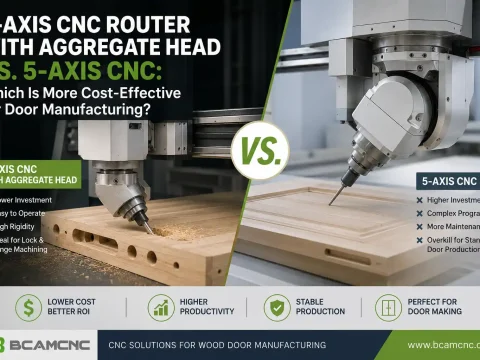
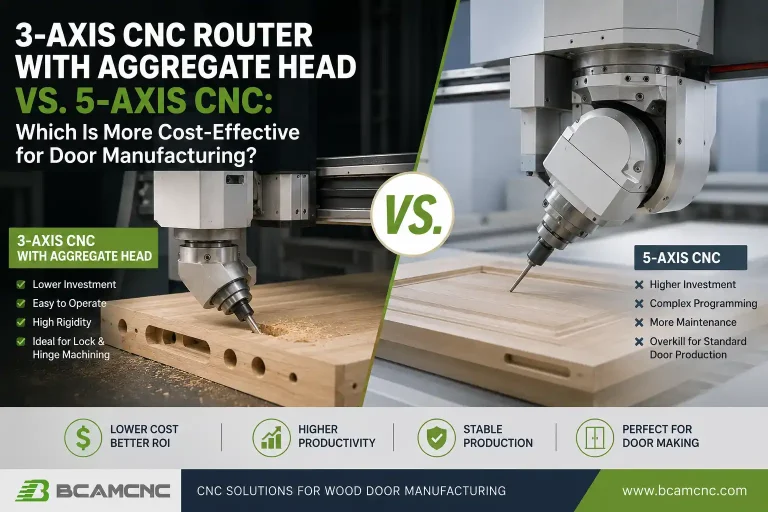
Door Manufacturing: Rigidity Matters More Than Advertised Speed
Wood door production introduces a different set of challenges.
Deep profiling operations, long cutting tools, and hardwood materials place significantly higher loads on the machine structure.
This is where machine rigidity becomes more important than spindle power.
Many procurement managers focus on spindle ratings such as 6 kW, 9 kW, or 12 kW. While power is important, excessive vibration caused by insufficient structural rigidity often creates greater production problems than a lack of horsepower.
Vibration can lead to:
- Poor edge finish
- Dimensional drift
- Excessive sanding
- Reduced tool life
- Joinery fit issues
A heavier, more stable machine often delivers better production results than a lighter machine with a larger spindle.
Sign Making and Decorative Components
Sign manufacturers frequently process:
- Wood
- Acrylic
- PVC
- Composite materials
For these applications, surface finish quality is often more important than material removal rate.
A slightly worn cutter may still hold dimensional accuracy while leaving visible edge defects that require additional finishing work.
Those additional labor costs rarely appear in machine ROI calculations, but they affect profitability every day.
Mold Making and Industrial Pattern Production
Many industrial users operate CNC wood routers for:
- Foam molds
- Foundry patterns
- Composite tooling
- Prototype components
- Architectural models
These applications place greater emphasis on accuracy, repeatability, and surface quality than production volume.
Industrial-grade machines commonly target positioning accuracy around ±0.05 mm under controlled conditions. Actual results depend heavily on machine calibration, tooling condition, fixture quality, and environmental stability.
The Feed Rate vs Tool Life Paradox
One of the most common mistakes in production is assuming higher feed rates automatically increase efficiency.
Operators often increase feed rates to maximize machine output.
Unfortunately, the relationship between feed rate and productivity is not that simple.
Running a compression bit at excessive feed rates may:
- Accelerate tool wear
- Increase spindle load
- Create poor edge quality
- Generate excessive heat
- Produce burn marks on material surfaces
The goal is not maximum speed.
The goal is maintaining a stable chip load that allows the cutter to remove material efficiently without excessive heat generation.
In practice, a properly optimized cutting program frequently outperforms an aggressive program that requires frequent tool replacement and edge rework.
Vacuum Hold-Down: The Hidden Source of Many Quality Problems
When parts fail dimensional inspection, operators often blame the machine.
The actual problem is frequently elsewhere.
A vacuum table functions well only when sufficient holding force is maintained.
Problems commonly occur when processing:
- Small components
- Warped sheets
- Porous MDF
- Damaged spoilboards
Even slight material movement can affect machining consistency.
If a sheet lifts only 0.5 mm during cutting, groove depths, drilling positions, and profile dimensions may become inconsistent.
The machine may be perfectly calibrated while the workpiece itself is moving.
Dust Extraction Is a Production Issue, Not a Housekeeping Issue
Dust extraction is often treated as an accessory purchase.
It should not be.
Poor dust collection can affect:
- Surface finish quality
- Tool life
- Sensor reliability
- Linear guide lifespan
- Vacuum performance
- Operator safety
One cabinet factory upgraded to a higher-speed CNC router expecting increased production capacity. Within several months, recurring downtime appeared.
The root cause was not the machine.
Fine wood dust was gradually accumulating inside sensors, vacuum channels, and electrical enclosures.
Maintenance costs increased while actual output declined.
A CNC wood router is only as efficient as the supporting systems around it.
Thermal Expansion and Environmental Stability
Many buyers expect laboratory-level accuracy from production equipment operating in uncontrolled factory environments.
That expectation is unrealistic.
If workshop temperatures fluctuate by 10–15°C during the day, thermal expansion affects both machine structures and materials.
Wood-based products are especially sensitive to environmental changes.
When troubleshooting dimensional variation, temperature and humidity should be evaluated before assuming machine failure.
Production Reality: Marketing Specifications vs Shop Floor Performance
| Feature | Marketing Focus | Production Reality |
|---|---|---|
| Spindle Power | Higher kW rating | Stability and tooling matter more |
| Rapid Travel Speed | Faster movement | Idle time often limits productivity |
| Machine Weight | Rarely discussed | Directly affects rigidity |
| Vacuum System | Pressure rating | Airflow volume is equally important |
| Automatic Tool Changer | Faster production | Precision and reliability matter more |
| Accuracy Claims | Laboratory conditions | Real results depend on process control |
A Real Production Case
A mid-sized cabinet manufacturer replaced two aging routers with a single high-speed CNC wood router.
Management expected production capacity to increase significantly.
Within a few months, actual efficiency dropped below expectations.
Initial investigations focused on machine performance.
The real causes were elsewhere.
Material loading remained manual.
Dust extraction was undersized.
Vacuum channels became partially blocked.
Sensor contamination increased downtime.
Material variation between MDF suppliers introduced assembly inconsistencies.
The machine itself was functioning correctly.
After improving material control, dust extraction, maintenance procedures, and workflow organization, production efficiency improved without additional equipment investment.
The lesson was simple.
A CNC router cannot compensate for weaknesses elsewhere in the process.
What a CNC Wood Router Cannot Do Well
A CNC wood router is extremely capable, but it has limitations.
It is not the ideal solution when:
- Workpieces cannot be securely held
- Tool maintenance is neglected
- Environmental conditions fluctuate excessively
- Production consists entirely of one-off jobs without programming resources
- Ultra-high-precision metal machining is required
Machines do not eliminate process variation.
They expose it.
FAQ
Should I prioritize spindle power or machine rigidity?
Rigidity should come first. A powerful spindle mounted on a flexible machine structure cannot deliver consistent results.
Why are my cabinet parts not fitting together during assembly?
Common causes include tool wear, incorrect cutter compensation, material movement during machining, and material thickness variation.
How often should machine alignment be checked?
For production environments performing precision joinery work, monthly squareness and calibration checks are generally recommended.
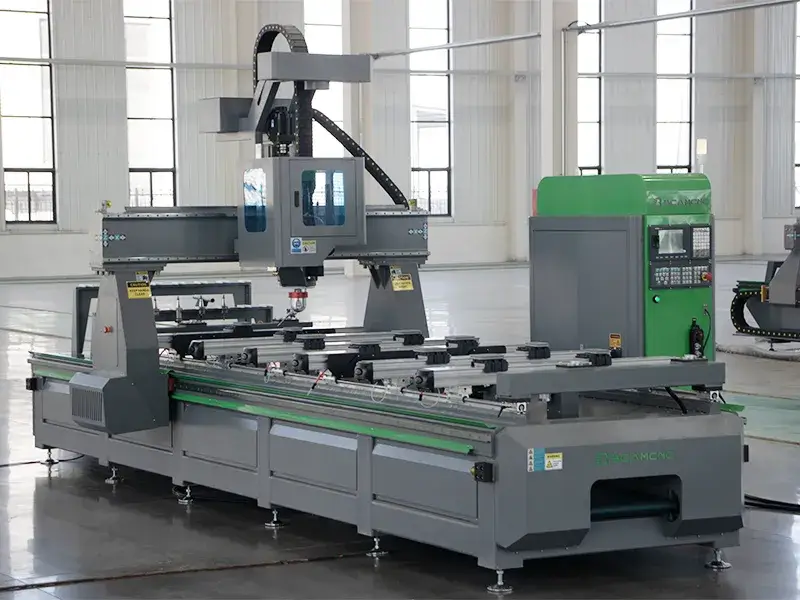
Is an ATC CNC wood router worth the investment?
For factories processing multiple operations and tool changes throughout the day, automatic tool changing can significantly reduce setup time and operator intervention.
How much compressed air does an ATC machine require?
Most pneumatic systems operate around 6–8 bar, but air quality is often more important than pressure alone. Moisture contamination can shorten the life of pneumatic components and tool changer systems.
A Final Thought Before You Compare Machines
When evaluating a CNC wood router, spend less time comparing brochure specifications and more time understanding your actual production bottlenecks.
Ask how the machine frame is manufactured.
Ask about spindle service intervals.
Ask where cable carriers typically fail.
Ask whether replacement sensors, drives, and pneumatic components are standard industrial parts or proprietary items.
The factories achieving the strongest return on investment are rarely the ones buying the most powerful machines.
They are the ones controlling material variation, maintaining tooling properly, managing dust effectively, and integrating the CNC wood router into a stable production process.
Before investing in more machine capacity, identify what is truly limiting your output. In many cases, the bottleneck is not the router itself—it is everything surrounding it.