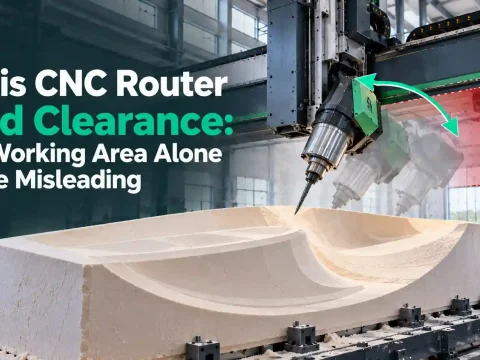

The radial runout of the cnc router machine tool has a very large impact on the tool. According to some technical data, when the radial runout increases by 0.01MM, the tool life will be reduced by 50%! So we have to minimize the radial runout of the tool.
So, what are the links related to the tool radial runout? Mainly include the situation of the chuck, the tool itself, the fit of the tool and the chuck, the fit of the chuck and the nut, and the tool clamping method.
Therefore, if we want to solve the problem of radial runout of cnc router machine tools, we must pay attention to several aspects.
1. The chuck should be intact and clean.
Any small damage on the chuck will cause uneven deformation during the clamping deformation process, and eventually increase the radial runout of the tool. The impression of dust is also very large, and it is not easy to be noticed by everyone. Dust will also increase the radial runout of the tool. After a lot of experiments, after cleaning the dusty chuck, the radial runout can be reduced by 50%! The service life of the corresponding tool can be increased by more than 2 times.
2. The extension length of the tool should be shortened as much as possible, and the cleaning of the tool should also be ensured.
The extended length of the tool is large, and the deformation of the tool is large under the same cutting force, which also increases the radial runout of the tool and reduces the service life of the tool. At the same time, if the protruding length of the tool is large, it will affect the finish of the processed workpiece, and it is very large in this respect. The tool should also be cleaned. Dust on the tool and dust on the chuck have the same influence on the radial runout, and it will greatly affect the service life of the tool.
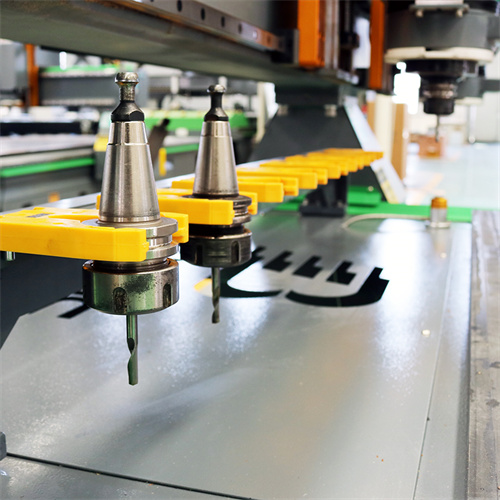
3. Pay attention to the cooperation of the tool and the chuck.
When clamping the tool, insert the tool after the chuck has begun to deform, so as to reduce the radial runout of the tool. In addition, attention should be paid when clamping, not that the greater the clamping force, the better. Experiments have shown that a reasonable clamping force can reduce the tool radial runout by 20%. This reasonable clamping force requires the operator of the machine tool to make a summary and experiment a lot to find the strength of the clamping tool.
If you have any other questions, you can directly consult our online customer service to answer you.