BC4G-120×4500 Double-Sided Seamless Welding for PVC and UPVC Window Profiles
Last Updated: 2026-09-01
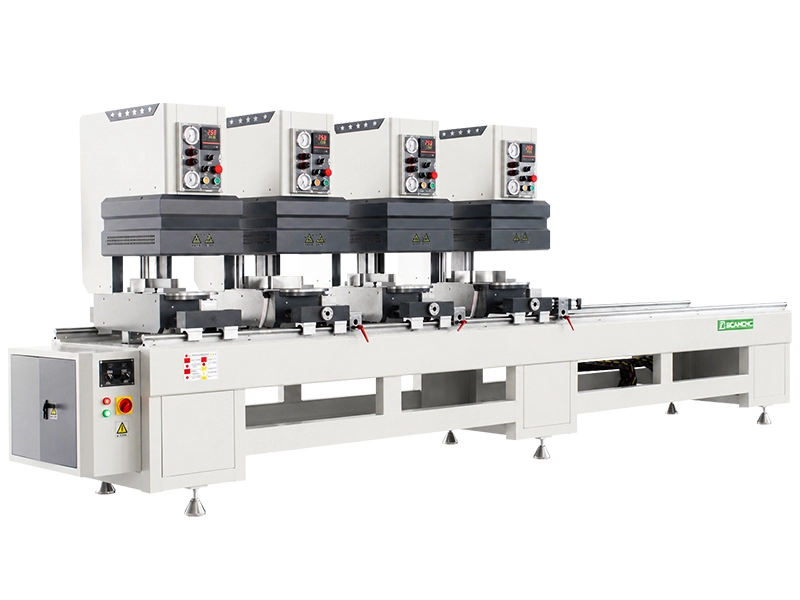
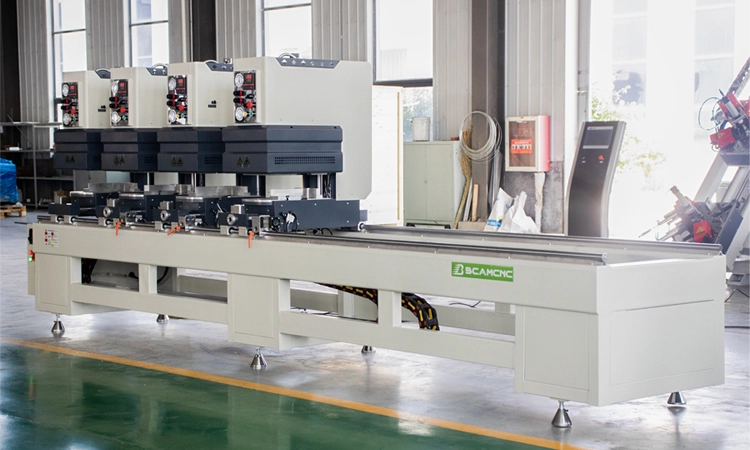
Four Head UPVC Welding Machine provides seamed and double-sided seamless welding for PVC and UPVC window profiles. Its four-head design, automatic bead trimming and 435–4300 mm welding range support efficient production with cleaner, flatter welded corners.
SALE
Brand
- BCAMCNC
Model
- BC4G-120×4500
Table Size
- 120×4500
$7,520.00Original price was: $7,520.00.$7,498.00Current price is: $7,498.00.
Supply – 360 Units in Stock Available for Sale Every Month
Quality – CE Certified for Safety & Reliability
Warranty – One-Year Limited Warranty for Entire Machine (Extended Warranties Available for Major Parts)
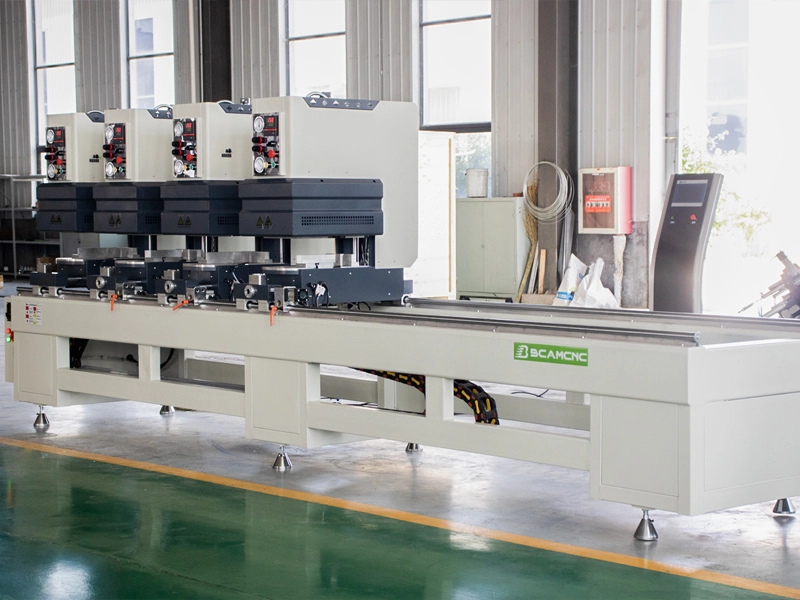
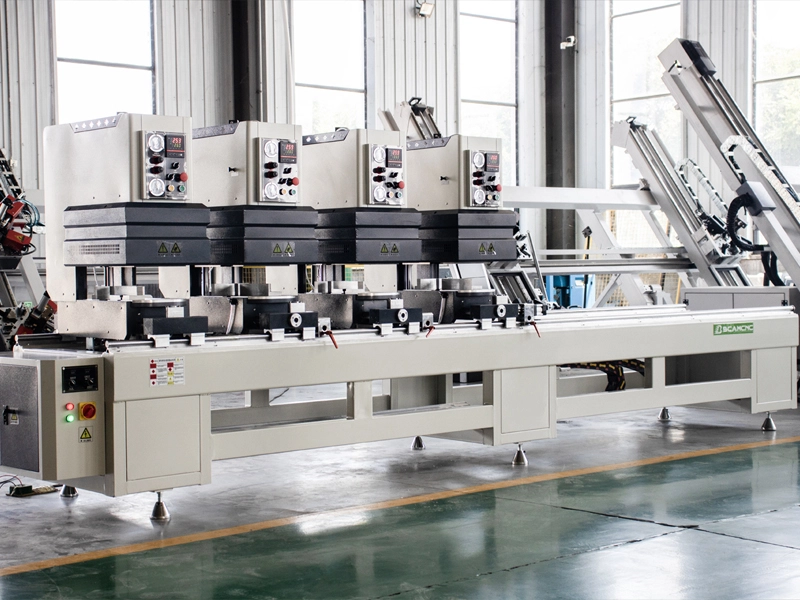
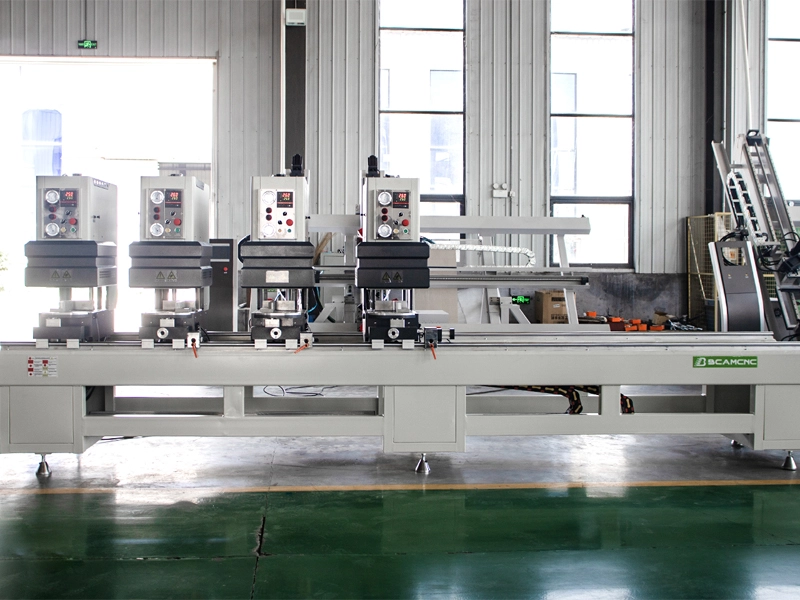
The BCAMCNC BC4G-120×4500 Four Head UPVC Welding Machine is designed for welding PVC and UPVC profiles used in window frames, sashes and door systems. Its four-head linear configuration supports efficient batch production, while switchable seamed and seamless welding modes allow the machine to process different profile surfaces and fabrication requirements.
In seamless mode, the integrated trimming system controls excess material on the upper and lower visible surfaces during the welding cycle. This produces flatter, cleaner corners and reduces subsequent manual corner-cleaning work, especially when processing colored, laminated or co-extruded profiles.
Product Overview of Four Head UPVC Welding Machine
The Four Head UPVC Welding Machine joins accurately cut thermoplastic profiles through controlled heating, positioning and pressure. It is suitable for manufacturers producing PVC and UPVC windows and doors in medium- and high-volume production environments.
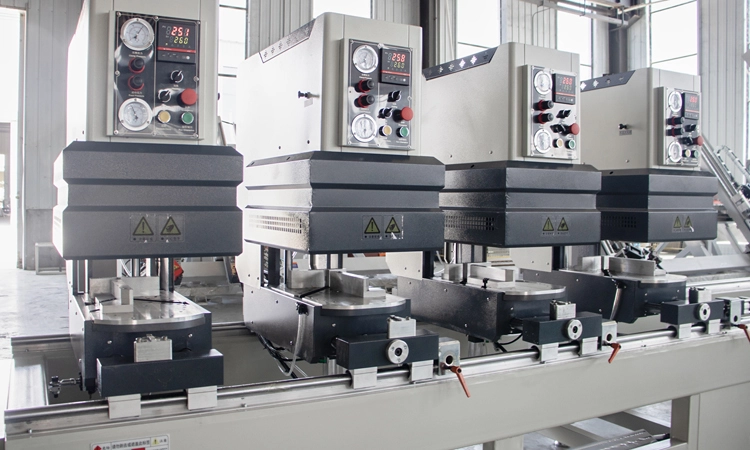
The machine combines four welding heads, individual temperature and pressure controls, pneumatic locking, precision guide rails and standardized alloy trimming cutters. Operators can select the required welding heads according to the profile dimensions and production task.
Flexible four-head operation
The four welding units can be selected according to the required profile layout. This provides more production flexibility than a conventional single-head or double-head welding machine and helps reduce repeated profile handling in batch production.
The number and arrangement of joints completed in each cycle depend on the profile dimensions, fixture layout and fabrication method.
Designed for visible corner quality
Switchable seamed and seamless welding makes the machine suitable for both standard white UPVC profiles and decorative profiles that require a cleaner corner appearance.
Seamless mode is especially useful for laminated, colored and co-extruded profiles because it controls the visible weld bead and reduces the risk of excessive manual cleaning damaging the profile surface.
Main Features and Machine Advantages
Automatic seamed and seamless mode switching
The machine can switch between conventional seamed welding and double-sided seamless welding according to the profile and finished-corner requirements.
Seamed mode is suitable for conventional profile production and reduces trimming-cutter use. Seamless mode controls the weld bead during welding to produce a cleaner visible surface.
Double-sided seamless welding
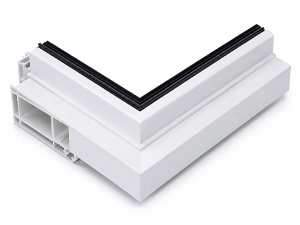
The trimming system works on the upper and lower visible sides of the welded profile. Excess material is controlled or removed during the welding process, improving corner flatness and reducing subsequent cleaning.
The final finish depends on the profile geometry, surface film, welding temperature, pressure and cutter configuration. Profile testing is recommended before batch production.
Four welding heads with individual controls
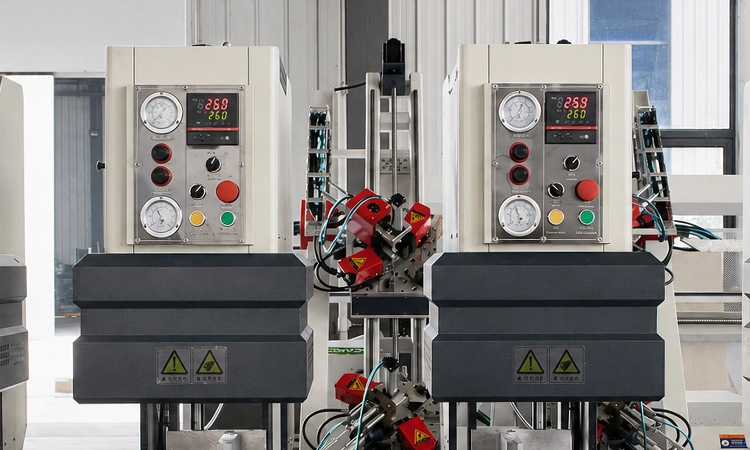
Each welding head is equipped with temperature, pressure and operating controls. Operators can monitor and adjust the welding conditions according to the selected profile system.
Independent head control supports different production layouts and makes machine adjustment more convenient.
Integrated upper pressure plate
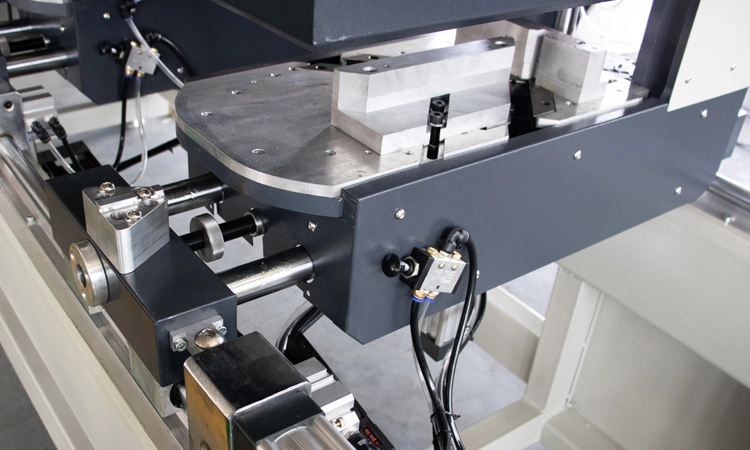
The aluminum-alloy upper pressure plate is machined in one setup on a CNC machining center. This integrated construction improves flatness and helps maintain consistent pressure across the profile during welding.
The four-corner linear-guide arrangement supports smooth vertical movement and helps reduce tilting or uneven pressure.
Widened welding heads
The widened welding heads provide stable support for profiles up to 120 mm wide. The extended guide structure improves movement stability and helps the machine maintain consistent positioning during repeated production cycles.
Stable positioning and clamping mechanism
The profile positioning and clamping structure holds the workpiece during heating and joining. Stable clamping reduces unwanted profile movement and supports more uniform welded corners.
A new pneumatic locking mechanism provides convenient adjustment, reliable locking and longer service life.
Extended precision guide rails
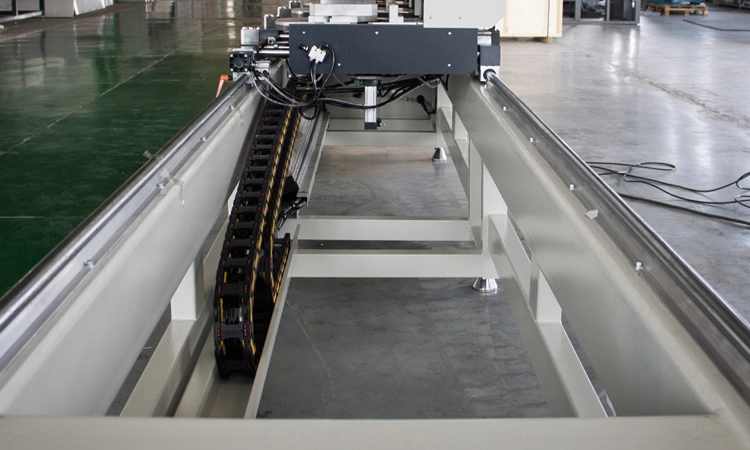
Extended linear guide rails support the horizontal movement of the welding heads. The rigid machine bed and guide structure help maintain positioning consistency across the machine’s 435–4300 mm welding range.
The protected cable chain organizes electrical and pneumatic lines during head movement, reducing cable interference and supporting easier maintenance.
Standardized interchangeable alloy cutters
The seamless trimming system uses hardened alloy cutters designed for strength, flexibility and wear resistance. Precision mounting holes help maintain cutter position during repeated production.
The redesigned cutter arrangement reduces the number of left- and right-hand cutter types from six to four. Standardized, interchangeable cutters simplify spare-parts management and help lower operating costs.
Protective covers are installed around the cutter area to reduce direct operator contact and protect the tooling.
Low-pressure mechanical feeding
The optimized mechanical transmission allows the feed mechanism to operate with a pressure setting of approximately 0.2–0.3 MPa. Controlled feeding helps prevent profile slipping, reduces deformation and improves welded-surface flatness.
The main compressed-air supply requirement for the machine remains 0.6–0.8 MPa.
Front-mounted pressure adjustment
Pressure regulators and gauges are positioned where the operator can conveniently monitor them. Real-time pressure visibility makes adjustment easier and helps identify insufficient or unstable air pressure before it affects welding quality.
Automatic weld-residue removal
The machine incorporates an automatic blowing and residue-removal function. This helps remove welding debris from the working area and reduces repetitive manual cleaning.
Minor finishing may still be required on complex profile contours, internal corners or profiles with special surface films.
Air-cooling and dust-blowing system
The air-cooling and dust-blowing system accelerates corner cooling and helps keep the welding area clean. Faster controlled cooling can shorten the waiting time between welding and profile handling.
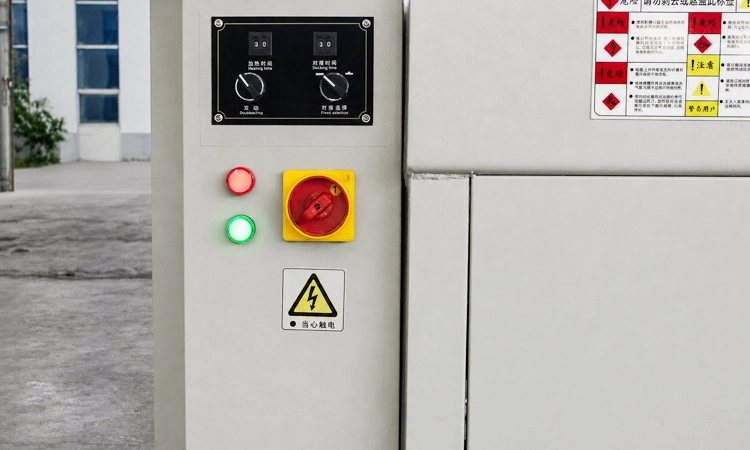
Convenient timing and power controls
The machine provides adjustable heating and joining time controls, status indicators and a main power isolator. Operators can set the process according to the UPVC formulation, profile wall thickness and corner-finish requirements.
Quick-release profile support rack
The profile support structure can be installed or removed quickly. This simplifies machine adjustment when changing between different frame dimensions and profile layouts.
Low-maintenance construction
The optimized guide, pressure-plate and mechanical transmission systems are designed to reduce frequent lubrication and special maintenance requirements. An organized working area also helps prevent welding residue from entering moving components.
Technical Specifications
Item
Technical Parameter
Machine model
BC4G-120×4500
Machine type
Four-head double-sided seamless welding machine
Rated voltage
380V / 3 phase
Rated frequency
50Hz
Maximum power
5.0kW
Working air pressure
0.6–0.8 MPa
Air consumption
Approx. 280 L/min
Welding profile height
25–120 mm
Maximum welding profile width
120 mm
Welding range
435–4300 mm
Overall dimensions
5260 × 960 × 1760 mm
Machine weight
Approx. 1500 kg
Electrical configuration note: The specifications above follow the machine nameplate. Alternative voltage and frequency configurations can be supplied according to the customer’s local electrical standard and must be confirmed before production.
Technical data note: Specifications may vary according to profile system, tooling and customized machine configuration. Final data should be confirmed in the sales contract.
Main Component Configuration
Component
Brand
Brand Origin
Programmable controller
Delta
Taiwan
Temperature controller
Shanghai Yatai
China
Solenoid valve
STNC
Joint-venture brand
Pneumatic cylinder
Baidi
China
Pushbutton switches
Schneider Electric
France
Low-voltage electrical components
Schneider Electric
France
Component brands may be replaced with equivalent-grade products when required by supply conditions or customized electrical specifications. The final configuration should be confirmed before ordering.
How the UPVC Profile Welding Process Works
1. Prepare the profiles
Cut the PVC or UPVC profiles to the required length and joint angle. Accurate cutting is essential because cutting errors can affect corner alignment and welding quality.
2. Select the welding mode
Choose seamed or seamless welding according to the profile surface and finished-corner requirements. Confirm that the correct cutters and fixtures are installed.
3. Set the welding parameters
Set the heating temperature, heating time, joining time and working pressure according to the UPVC formulation, profile wall thickness and supplier recommendations.
4. Position and clamp the profiles
Place the prepared profiles against the positioning stops. The pneumatic clamping system secures the workpieces and reduces movement during the welding cycle.
5. Heat the joint surfaces
The heating plates move into position and soften the profile joint surfaces under controlled temperature and time conditions.
6. Join and press the profiles
After heating, the plates retract and the prepared profile ends are pressed together. Controlled pressure forms a strong thermoplastic joint.
7. Trim the visible weld bead
When seamless mode is selected, the integrated cutters control or remove excess material on the upper and lower visible surfaces during the cycle.
8. Cool and release the workpiece
The corner is held while it cools and stabilizes. The clamps then release the welded profile for inspection and the next production operation.
Suitable Profiles and Applications
PVC and UPVC window frames
The machine can weld profiles used in casement, sliding and fixed-window frame production.
UPVC window sashes
It supports sash-profile welding for residential and commercial UPVC window systems.
PVC and UPVC door profiles
Profiles used in UPVC door frames and door sashes can be processed when their dimensions fall within the machine capacity.
Colored and laminated profiles
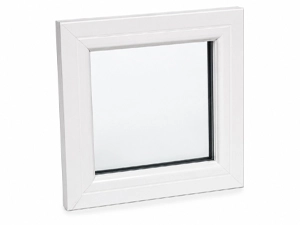
Double-sided seamless welding helps produce cleaner visible corners on colored, wood-grain laminated and co-extruded profiles. A profile trial should be completed to determine the correct temperature, pressure and cutter arrangement.
Mullions and special profile joints
One welding head can be configured for special-angle processing. With matched fixtures and process settings, the machine may be used for mullion joints, integrated frames, round windows, arched windows and other non-standard profile structures.
Special applications should be evaluated using the customer’s profile drawing or physical sample.
Seamed Welding Versus Seamless Welding
Comparison
Seamed Welding Mode
Seamless Welding Mode
Visible weld bead
Conventional weld bead remains
Upper and lower visible beads are controlled or trimmed
Typical profiles
Standard white PVC/UPVC profiles
Colored, laminated and co-extruded profiles
Cutter use
Reduced cutter engagement
Seamless trimming cutters are engaged
Corner appearance
Conventional welded finish
Flatter and cleaner visible surface
Post-welding cleaning
Usually requires more cleaning
Reduces visible-surface cleaning
Main advantage
Lower cutter wear and simple production
Improved corner appearance and less finishing
Seamless welding reduces post-processing but does not guarantee that every internal groove or complex profile contour will require no cleaning. The result depends on profile design, tooling and process settings.
Four-Head Linear Welder or CNC Four-Corner Welding Center?
This product is a four-head linear UPVC welding machine. Its four welding units are mounted along a long machine bed and can be selected according to the required welding task.
It should not automatically be described as a CNC four-corner welding center. A four-corner welding center normally has a different machine layout designed around complete-frame positioning and coordinated corner processing.
The number of corners or joints completed per cycle with this machine depends on the frame structure, profile dimensions, selected heads and fixture arrangement. Customers requiring complete-frame welding in one automatic cycle should provide their window drawings for configuration confirmation.
Installation and Operating Requirements
Power supply
The standard machine shown uses 380V, three-phase, 50Hz power. Confirm the required voltage, frequency and plug or terminal standard before production.
Compressed air
Provide clean and dry compressed air at 0.6–0.8 MPa. An air filter, moisture separator and stable compressor capacity are recommended.
Installation space
The machine dimensions are 5260 × 960 × 1760 mm. Additional space should be reserved for profile loading, unloading, operator access, electrical maintenance and compressed-air connections.
Profile preparation
The quality of the finished corner depends on accurate profile cutting. Cutting length, angle and end-surface quality should be checked before welding.
Process testing
Temperature, heating time, joining pressure and cooling time should be tested whenever the profile supplier, material formulation, wall thickness or surface film changes.
Operator safety
Operators should receive training before using the machine. Appropriate ventilation, hand protection and eye protection should be provided, and guards should remain installed during operation.
Processed Sample Display
Why Choose the BCAMCNC Four Head UPVC Welding Machine?
Higher batch-production efficiency
Four selectable welding heads reduce repeated profile handling and provide more production flexibility than a single-head welding machine.
Cleaner visible corners
Double-sided seamless trimming improves the appearance of upper and lower profile surfaces and reduces subsequent corner-cleaning work.
Flexible welding modes
Seamed and seamless welding modes allow one machine to process both conventional white profiles and decorative colored or laminated profiles.
Stable mechanical structure
Integrated pressure plates, widened welding heads, extended guide rails and a rigid machine bed support consistent positioning and pressure.
Lower tooling costs
Standardized interchangeable alloy cutters simplify replacement and reduce the number of different spare cutter types required.
Convenient adjustment
Front-mounted pressure regulators, individual head controls and visible temperature displays make production settings easier to monitor.
International technical support
BCAMCNC provides machine configuration guidance, operating manuals, remote technical support and profile-based application evaluation. Overseas installation assistance can be arranged according to project requirements.
Warranty support
The machine is supplied with a one-year limited warranty. Extended support and spare-parts packages can be discussed according to the customer’s production plan.
Frequently Asked Questions
What is a Four Head UPVC Welding Machine used for?
It is used to heat and join PVC or UPVC profiles for window frames, sashes and door systems. Four welding heads provide efficient batch production and flexible joint processing.
What is double-sided seamless welding?
Double-sided seamless welding controls or trims excess material on the upper and lower visible surfaces during the welding cycle. It produces a flatter-looking corner and reduces subsequent manual cleaning.
Can this machine weld colored or laminated profiles?
Yes. It is suitable for colored, laminated and co-extruded PVC/UPVC profiles when the correct cutters, temperature, pressure and process settings are used. Sending profile samples for testing is recommended.
Can the four welding heads be used separately?
The welding heads can be selected according to the production task. The available head combinations should be confirmed during machine configuration.
Does seamless welding eliminate all corner cleaning?
It significantly reduces cleaning on the upper and lower visible surfaces. Minor finishing may still be necessary on internal grooves, complex contours or profiles with special films.
Can this machine weld a complete four-corner frame in one cycle?
This is a linear four-head welding machine. Whether a complete frame or multiple joints can be processed in one cycle depends on the frame design, profile dimensions and fixture arrangement. Send the window drawing to BCAMCNC for confirmation.
What is the maximum profile capacity?
The machine supports profile heights from 25 to 120 mm and profile widths up to 120 mm. Its welding range is 435–4300 mm.
What air compressor does the machine require?
The machine requires a stable supply of clean, dry compressed air at 0.6–0.8 MPa. Air consumption is approximately 280 L/min.
Can the voltage be customized?
The displayed machine uses 380V, three-phase, 50Hz power. Other electrical configurations may be available and must be confirmed before manufacturing.
What information is required for a quotation?
Please provide the profile cross-section drawing, profile material and surface type, maximum frame dimensions, required welding mode, expected daily output, local voltage and destination country.
Customers Say – Don’t take our words as everything. Find out what customers say about our products and services they have purchased, owned or experienced.
Reviews
There are no reviews yet.
Be the first to review “Four Head UPVC Welding Machine”Cancel Reply
Absolutely outstanding work! We partnered with BCAMCNC for a complex 5-axis CNC router mold, and the results exceeded our expectations. The precision, surface finish, and attention to detail were flawless—exactly what we needed for our high-tolerance production. The team was responsive, professional, and delivered ahead of schedule. Highly recommend for anyone needing top-tier CNC machining!
A
Anika
5 out of 5
Reviewed in Netherlands
on
The robotic arms in our production line handle 4’x8′ MDF sheets with flawless precision, enabling seamless material handling around the clock. Thanks to this automation, our night shift now operates entirely unattended—boosting productivity while reducing labor costs. The 5+4 drilling head configuration has revolutionized our cabinet manufacturing process, delivering unmatched speed and accuracy for complex drilling patterns. BCAMCNC went above and beyond by customizing their CNC software to integrate perfectly with our ERP system, ensuring real-time data synchronization and streamlined workflow management.
G
Giuseppe
5 out of 5
Reviewed in Italy
on
Finally, a 5-axis that understands wood! The F-PTP’s low-RPM/high-torque spindle prevents walnut tear-out, and the dust extraction ports are RIGHT where chips fly. We produce Baroque-style chair legs with undercuts in one setup. BCAMCNC even sent custom clamping jigs for our odd-shaped blanks.
E
Erik
5 out of 5
Reviewed in Sweden
on
The BCAM CNC Router has completely elevated our custom furniture production! Its precision carving brings even the most intricate oak and MDF designs to life with flawless detail, while the industrial-grade vacuum table ensures razor-thin panels stay perfectly stable during machining. The integrated dust extraction system has revolutionized our workspace – no more post-job cleanups or airborne particles. Whether we’re crafting high-end cabinetry or delicate decorative inlays, this machine delivers museum-quality results every time. An absolute game-changer for woodshops serious about quality and efficiency!
D
Diego
5 out of 5
Reviewed in Mexico
on
The BCM-1325SA manual-change CNC router delivers exceptional efficiency for custom furniture joints, proving that advanced automation isn’t always necessary. Its ergonomic tool rack is positioned right beside the workspace, eliminating wasted movement and maximizing productivity. Despite costing $8K less than auto-change models, it maintains impressive ±0.2mm accuracy—ideal for precision woodworking. This balance of cost savings, thoughtful design, and reliability makes it a standout choice for small to mid-scale furniture production.
R
Raj P.
5 out of 5
Reviewed in India
on
As a first-time CNC user, I was initially daunted by the learning curve—but the BCAMCNC ATC CNC Router quickly proved to be the ideal machine to start my journey. Its heavy-duty construction delivers exceptional rigidity, far surpassing standard CNC routers, which translates to cleaner cuts and smoother operation, especially in metalwork.
S
Stephenbecerra
5 out of 5
Reviewed in Canada
on
I wanted a CNC router for woodworking, as well as a drag knife for cutting foam, cardboard, rubber, and some sealing materials, so I ordered the BCM2030C and so I did not have to purchase two machines. So far everything is running as expected. The only issue was the controller switching, so I reached out to BCAMCNC tech support and they were responsive and did an excellent job of diagnosing and debugging the software in a timely fashion.
M
Maria
5 out of 5
Reviewed in Germany
on
Upgraded from a 2020 model to the BCM-2030D. The dual-spindle design lets us engrave and cut simultaneously. Dust extraction ports are perfectly placed. Our woodworking shop’s productivity jumped by 40%. BCAMCNC’s 24/7 support is a lifesaver!
L
Liam O.
5 out of 5
Reviewed in Türkiye
on
Our workshop specializes in carbon steel and aluminum fabrication, and the BCAMCNC fiber laser cutter has exceeded expectations! It delivers razor-sharp cuts on 1-20mm carbon steel and 0.5-15mm aluminum with impressive speed (±0.05mm precision). The intuitive interface reduced operator training time by 40%, while the sealed cutting head minimizes oxidation on aluminum. Maintenance is surprisingly simple – just weekly lens cleaning. After 6 months of heavy use, it remains our most reliable investment for aerospace-grade results.
L
Lee
5 out of 5
Reviewed in South Africa
on
We’ve been running the BCAMCNC edge bander in our mid-sized cabinet shop for about 5 months now. It’s not perfect – we had to tweak the glue temperature settings for thicker ABS edges – but once dialed in, it’s been solid. The automatic corner trimming works about 90% of the time (still needs occasional manual touch-ups on tricky curved pieces). What really stands out is the build quality – no loose components after daily 8-hour shifts like we experienced with our previous machine. For the price point, it’s been a reliable workhorse that’s cut our edge banding time by nearly half













Reviews
There are no reviews yet.