
In modern furniture production, efficiency and accuracy are critical. From cabinet manufacturing to panel furniture and custom interiors, a CNC router has become a core machine in many workshops. However, not all CNC routers are suitable for furniture production. Choosing the right machine can directly affect output, quality, and operating cost.
This article explains what to look for when selecting a CNC router for furniture production.
Working Area and Table Size
Furniture factories usually process large panels such as MDF, plywood, and particle board. A common and practical working size is 4×8 feet (1325 mm), which matches standard sheet material.
For higher productivity, some factories choose larger tables or nesting CNC routers that allow full-sheet processing with optimized material usage. The table size should match your panel dimensions and daily output requirements.
Frame Structure and Stability
Furniture production involves long working hours and continuous cutting. A rigid and stable machine frame is essential to maintain accuracy over time.
Key points to check:
- Heavy-duty welded steel frame
- Stress-relieved structure
- Linear guides from reliable brands
A stable structure reduces vibration, improves cutting quality, and extends machine lifespan.
Spindle Power and Tool Options
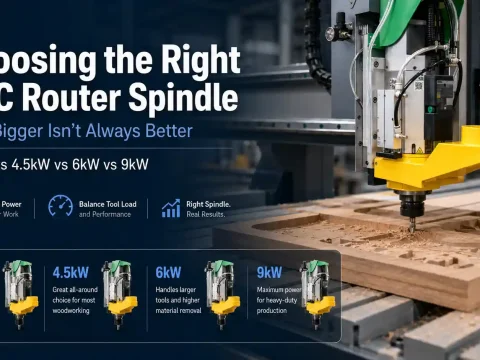
Most furniture materials are wood-based panels, which require consistent spindle power rather than extremely high RPM.
Typical spindle options:
- 6 kW to 9 kW spindle for furniture cutting
- Air-cooled or water-cooled depending on usage time
- Compatibility with drill units or saw blades
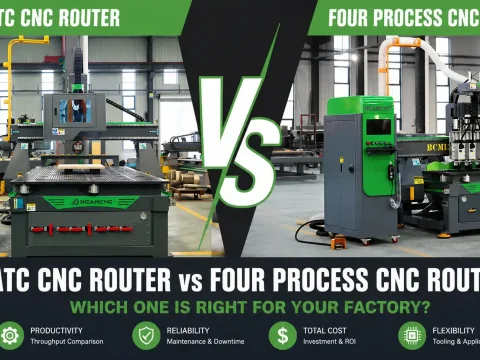
For factories handling multiple operations, ATC (Automatic Tool Changer) systems can significantly improve efficiency by reducing manual tool changes.
Automatic Tool Changer (ATC) System
For panel furniture and cabinet production, ATC CNC routers are increasingly popular. They allow the machine to automatically switch between tools for cutting, drilling, and grooving.
Benefits of ATC for furniture production:
- Shorter processing time
- Consistent machining accuracy
- Reduced labor dependency
If you produce cabinets, wardrobes, or modular furniture, an ATC CNC router is a practical long-term investment.
Nesting Software and Control System
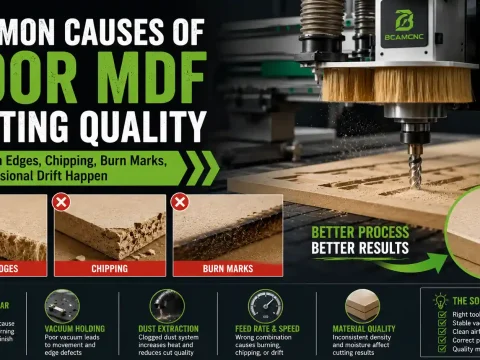
Furniture production often relies on nesting to reduce material waste and speed up processing. A good CNC router should support professional nesting software and a stable control system.
Important considerations:
- Compatibility with CAD/CAM software
- Easy-to-use interface for operators
- Stable performance during long jobs
Reliable control systems help reduce errors and improve overall workflow efficiency.
Vacuum Table and Material Fixing
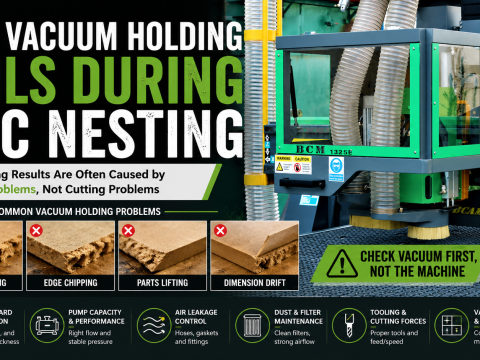
A vacuum table is essential for furniture CNC routers. It keeps panels flat and stable during cutting, especially when processing large sheets.
Look for:
- High-power vacuum pumps
- Zoned vacuum tables for flexible fixing
- Good sealing performance
Proper material fixing improves cutting accuracy and reduces rework.
After-Sales Support and Service
A CNC router is a long-term investment. Reliable after-sales support is just as important as machine specifications.
Before purchasing, consider:
- Technical support availability
- Spare parts supply
- Training and documentation
Choosing a supplier with experience in furniture CNC solutions can reduce downtime and operational risk.
Final Thoughts
Selecting a CNC router for furniture production is not only about price or size. It requires a clear understanding of your production needs, materials, and future expansion plans.
By focusing on machine stability, tool flexibility, automation level, and support service, furniture manufacturers can choose a CNC router that delivers consistent quality and long-term value.
About BCAMCNC
BCAMCNC provides CNC router solutions for furniture manufacturing, including entry-level and ATC models designed for cabinet, panel, and custom furniture production.